
Fast, Reliable Dryer Vent Cleaning Across Topeka
Dryer vent cleaning in Topeka typically runs $150–$325 for a standard single-family home, with most jobs completed in under two hours. If you’re noticing longer dry cycles, a hot laundry room, or that distinctive burnt-lint smell near your dryer, you’re looking at a clogged vent — and in Topeka, the problem’s often worse than it looks.
We drive to Topeka from Wichita for scheduled appointments, and we know the city’s housing stock inside out: the post-war bungalows in Potwin, the Cape Cods near Washburn University, the ranches sprawling south toward 66605. Henry Wood, owner and lead technician, handles every job personally — not a rotating crew. Call (855) 595-7944 for a free estimate, or read on to understand why Topeka’s unique conditions make professional dryer vent cleaning more critical here than in most Kansas markets.
Our Dryer Vent Cleaning team has worked from North Topeka’s river-adjacent neighborhoods to the southeast quadrant near Lake Shawnee, and we’ve learned that this city’s combination of older housing, prairie burn seasons, and river-valley humidity creates vent problems you won’t find in standard maintenance guides.
Why Atlas Air Duct & Vent Cleaning Kansas Is Topeka’s Preferred Dryer Vent Cleaning Company
We’ve earned 276 customer reviews averaging 4.8 stars, and a growing share of those come from Topeka homeowners who found us after frustrating experiences with franchise operations that sent inexperienced technicians with shop-vac equipment. Henry Wood has spent 17 years inside duct systems, and he still runs every service call as the hands-on lead technician. When you book with Atlas, you’re getting the most experienced person in the company — not a newly trained employee working from a checklist.
Our response time to Topeka is typically same-week for non-emergency appointments, with emergency calls prioritized for same-day or next-day service. We bring professional-grade Rotobrush contact-cleaning systems and Nikro negative-pressure vacuums — the same equipment restoration contractors use, not residential-grade setups. That matters in Topeka, where the Flint Hills burn season and decades-old galvanized vent pipe demand more aggressive cleaning capability than a household vacuum can deliver.
We also carry Abatement Technologies equipment for particulate containment and sanitizing. When we pull a vent packed with prairie ash and mold spores from a flooded basement in 66603, we’re equipped to handle it safely — not blow it back into your laundry room.
Our Dryer Vent Cleaning Services in Topeka
Dryer Vent Inspection
Every job starts with a full visual and airflow inspection. In Topeka’s older neighborhoods — Potwin, Oakland, parts of North Topeka — we regularly find original 1950s and 1960s vent runs that homeowners didn’t know existed. These galvanized steel pipes, often buried in uninsulated basement walls, corrode from the inside after decades of moisture exposure from Kaw River flooding events and summer humidity. We measure airflow in cubic feet per minute, photograph the vent interior with a borescope, and give you a straight assessment: cleanable, repairable, or due for replacement. An inspection in Topeka runs $75–$125, credited toward cleaning if you proceed.
Vent Cleaning
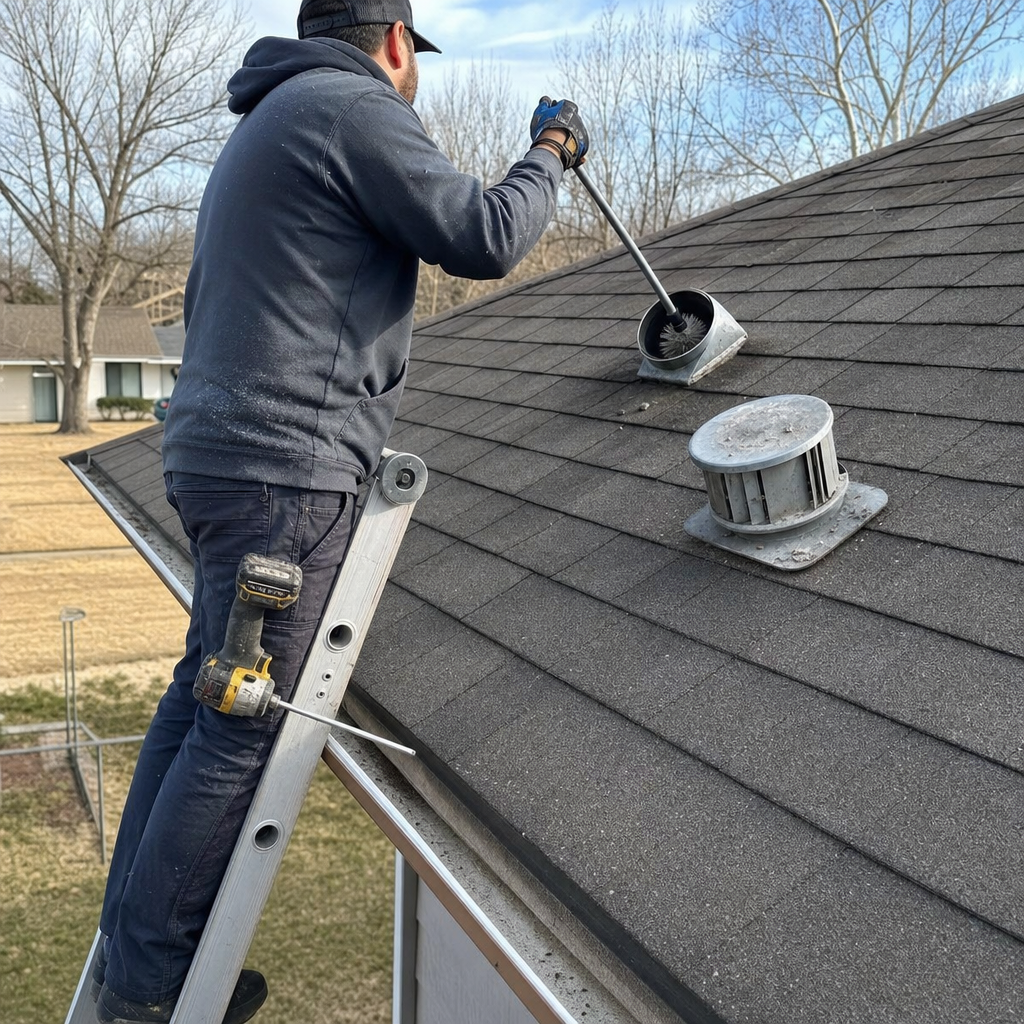
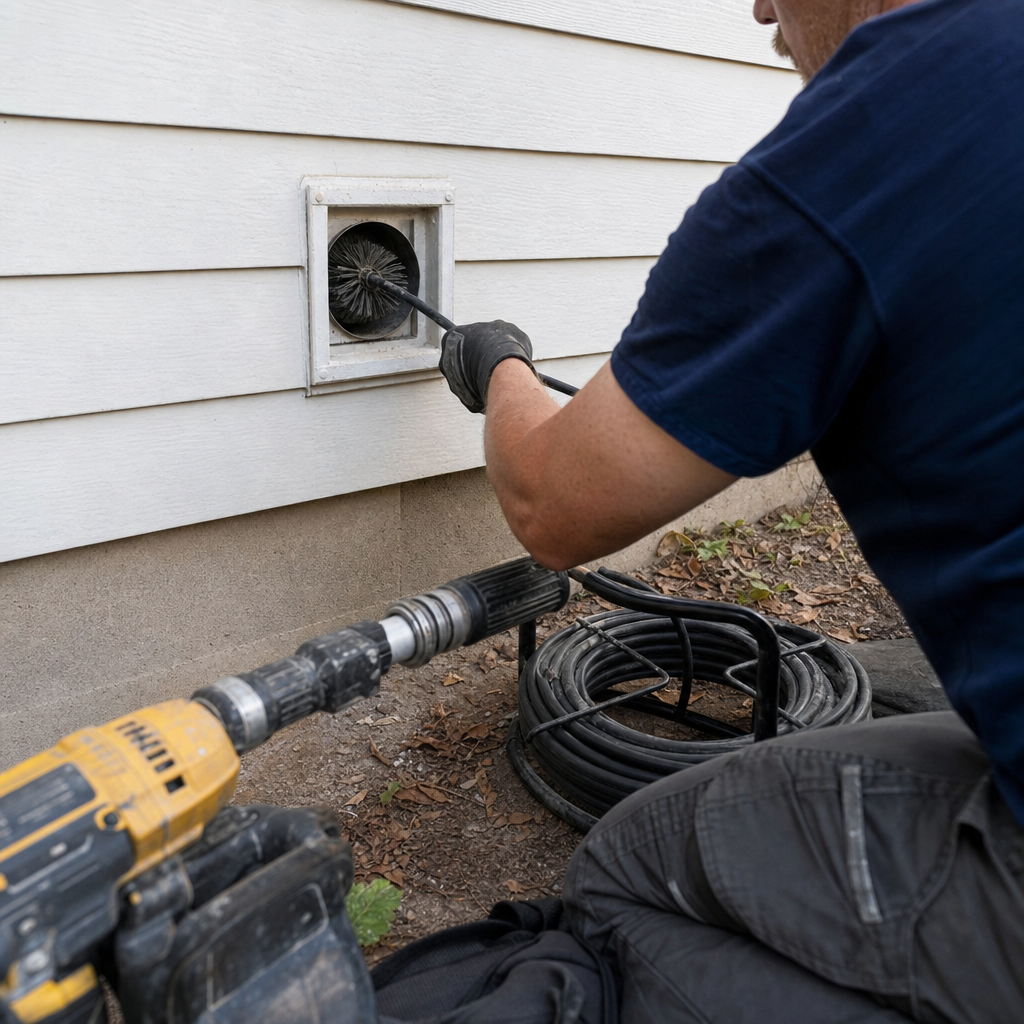
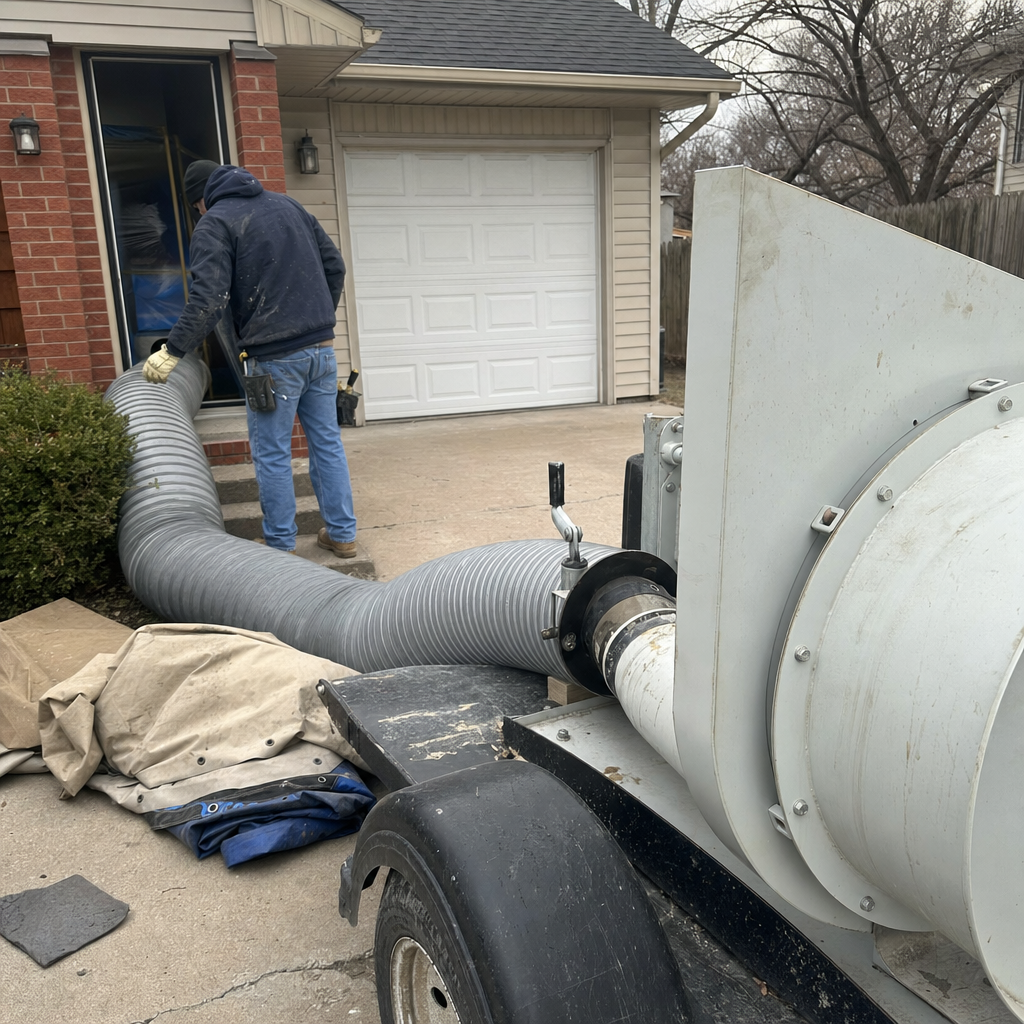
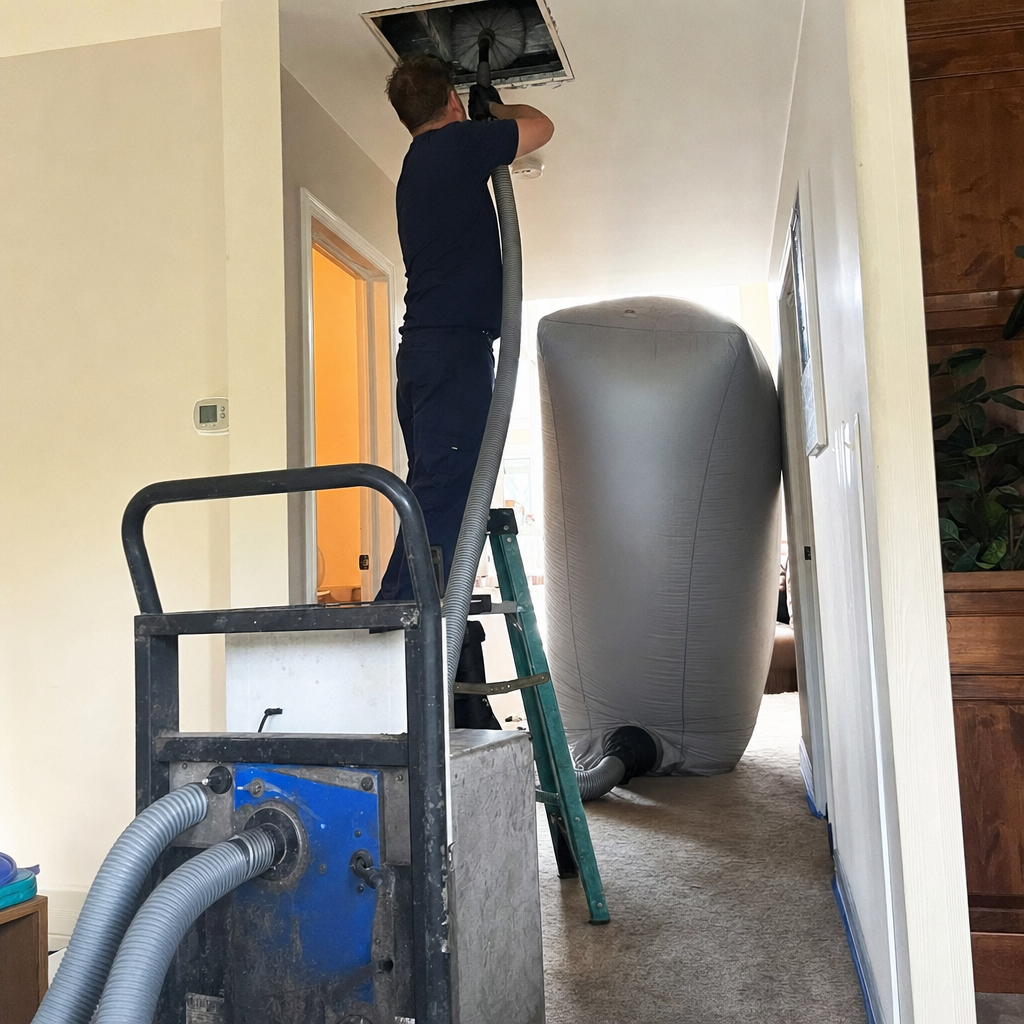
This is where our Rotobrush system earns its keep. The rotating brush head scrubs the full interior surface of rigid or flexible ductwork, while the Nikro negative-pressure vacuum pulls dislodged debris into a sealed containment drum. In Topeka’s 66605 and 66607 ZIP codes, we see vents coated with a distinctive reddish-brown crust — prairie ash from the Flint Hills burns binding with lint into something no household vacuum can touch. Last April we cleared a dryer vent on SW Munson Avenue in the 66605 ZIP where the homeowner thought the slow drying was just humidity. When we pulled the cover, it was packed with fine reddish ash from the Flint Hills burns, mixed with lint from a Honeywell electric dryer. We flushed the full 35-foot rigid run with our Rotobrush system and installed a new bird guard — drying time dropped from three cycles to one.
Lint Removal
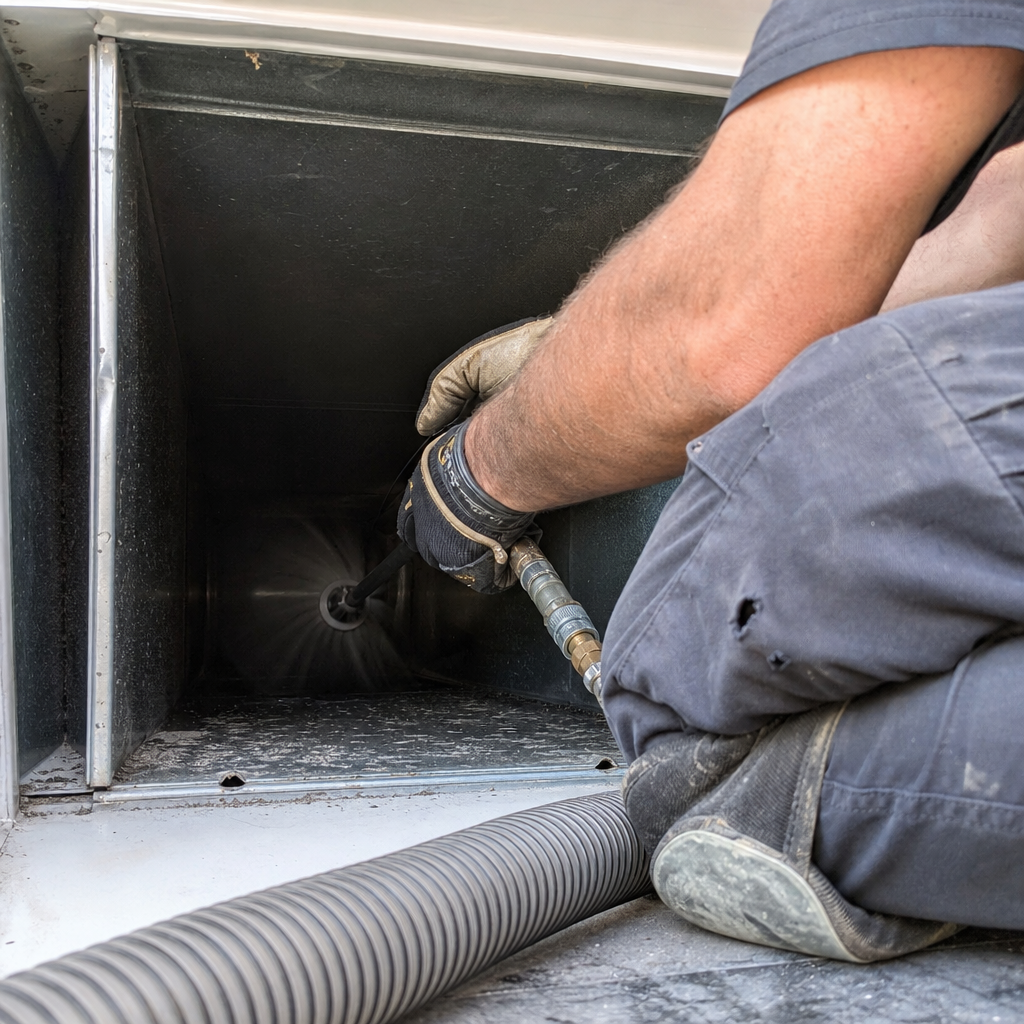
Lint accumulation is the immediate fire hazard, but in Topeka it’s rarely just lint. The combination of prairie ash, pollen from the tallgrass region, and moisture from uninsulated basement runs creates compacted, almost ceramic deposits that narrow vent bores by 30–50 percent before homeowners notice slower drying. We extract this material mechanically — brushing and vacuuming, not compressed air that could create blockages deeper in the run. For Topeka’s post-war bungalows with original stamped-steel ductwork, this mechanical approach is essential; the thin metal walls can’t handle aggressive air-blasting without separating at the seams.
Vent Rerouting
Some Topeka homes have vent runs that were never up to code — too long, too many bends, or terminated in crawl spaces instead of exterior walls. The 1940s–1970s housing stock in core ZIP codes 66603–66607 often has dryers installed in basement corners with vent runs stretching 30+ feet through uninsulated joist bays. We reroute these to shorter, straighter paths using rigid aluminum pipe where possible, improving airflow and reducing future lint accumulation. A reroute in Topeka typically adds $200–$400 to the base cleaning cost but permanently solves chronic clogging.
Bird Guard Installation
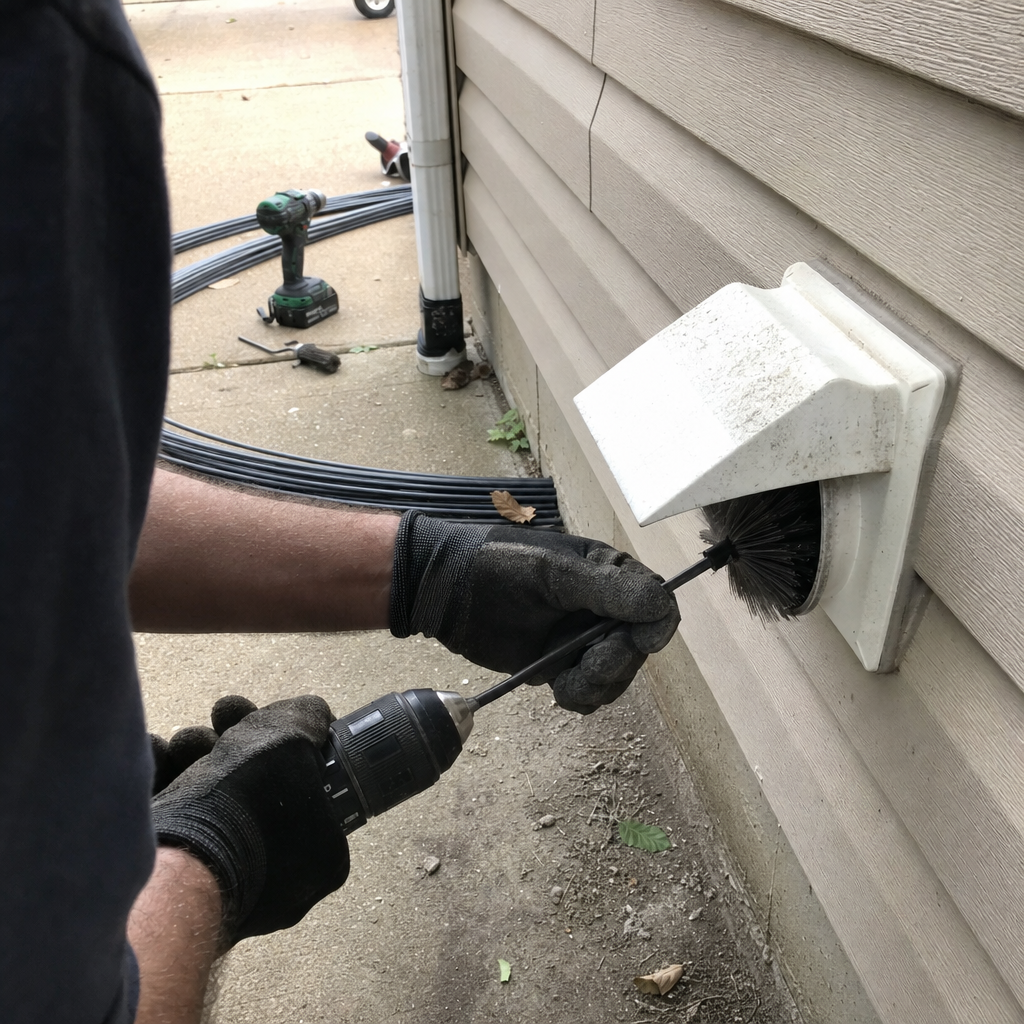
Topeka’s mature tree canopy — especially in established neighborhoods like Potwin and near Gage Park — attracts nesting birds and squirrels that pack vent terminations with debris. We install steel mesh bird guards with hinged cleanout access, sized to your vent diameter. This is standard practice after every cleaning we perform in Topeka; without it, you’re likely looking at a repeat clog within a season.
Vent Cap Replacement
Broken or missing vent caps are an open invitation for pests and weather intrusion. We stock replacement caps for 4-inch and 6-inch terminations, including low-profile models that meet Topeka’s aesthetic guidelines in historic districts.
What happens when you call
- 1
A real person answersNo phone trees — you reach a local pro.
- 2
You get an upfront price rangeHonest numbers before anyone is dispatched.
- 3
A background-checked tech heads outLicensed & insured, dispatched right away.
- 4
You approve before work beginsNothing starts until you say go.
Trusted Brands We Service in Topeka
We regularly service Honeywell and Aprilaire ventilation components in Topeka homes, and we stock common replacement parts — vent caps, transition ducts, wall boxes — to complete repairs in a single visit. Our equipment fleet includes Rotobrush contact-cleaning systems, Nikro negative-pressure vacuums, and Abatement Technologies containment gear. That means when we find a Honeywell dryer booster fan clogged with prairie ash in a 66605 ranch home, we can clean, test, and restore it without ordering parts or scheduling a return trip. For Topeka homeowners, that translates to one day of disruption instead of two or three.
Common Dryer Vent Cleaning Problems We See in Topeka Homes
- Prairie ash binding with lint in southeast Topeka vents. Starting in late March, prescribed burns in the Flint Hills — just east of Topeka — blow fine prairie ash into city yards, clogging dryer vents with a reddish-brown soot that standard lint traps don’t catch and that homeowners often mistake for simple road dust. By April and May, we’re pulling dense, crusted deposits from vents in 66605 and 66607 that require Rotobrush agitation to break loose.
- Flood-corroded galvanized pipe in river-adjacent basements. Kaw River flooding in basements common to 66603–66607 introduces moisture that corrodes old galvanized dryer vent pipes, narrowing the bore and trapping lint. We’ve replaced vent runs in North Topeka homes where the interior diameter had rusted down to less than two inches — a severe fire hazard hidden behind basement drywall.
- Moisture accumulation in uninsulated basement runs. Uninsulated basement duct runs in post-war bungalows sweat during humid 100°F summers, creating damp pockets where lint sticks and molds. Topeka’s position at the western edge of the humid continental zone means these conditions persist for months, not weeks.
- Original 1950s–1960s vent configurations in historic districts. Homes in Potwin and near Washburn University often retain original vent paths that violate modern code — too long, too many elbows, or terminating in crawl spaces. These configurations were marginal when new and become dangerous after decades of lint accumulation.
Pricing for Dryer Vent Cleaning in Topeka, KS
| Service | Typical Range in Topeka |
|---|---|
| Standard dryer vent cleaning (single-family, ground-floor laundry) | $150–$225 |
| Multi-story or extended run (25+ feet, basement-to-roof) | $225–$325 |
| Vent rerouting (new path, rigid aluminum) | $200–$400 additional |
| Bird guard installation | $45–$85 |
| Vent cap replacement | $35–$75 |
| Initial inspection (credited toward service) | $75–$125 |
What moves you within these ranges? The length and accessibility of your vent run, whether we find corrosion or damage requiring repair, and the severity of buildup — prairie ash crusts take longer to remove than standard lint. Homes in 66605 and 66607 with post-burn-season deposits typically fall in the upper half of the cleaning range. We provide upfront pricing after inspection, before any work begins. Estimates are free: call (855) 595-7944 to schedule.
We Also Serve Cities Near Topeka
Henry Wood regularly schedules appointments in Lawrence, Tonganoxie, Eudora, and De Soto — the same owner-led service, the same professional equipment, with routing optimized for homeowners throughout northeast Kansas. If you’re in a outlying area and unsure about coverage, call and we’ll confirm availability.
Serving Topeka, KS — Our Local Coverage Area
We’re based in the Topeka area and know this community well. Use the map below to see our service coverage — if you’re nearby, we can almost certainly help.
FAQs — Dryer Vent Cleaning in Topeka
Yes — significantly so. The prescribed burns that begin in late March send millions of tons of fine ash particulates into Topeka’s air, and that ash infiltrates dryer vents through exterior termination caps, binding with lint into a dense, reddish-brown crust standard cleaning can’t remove. If you live in 66605, 66607, or any southeast Topeka neighborhood, you should schedule a post-burn-season inspection every April or May. Call (855) 595-7944 to book — we’ll check whether your vent needs professional agitation or just a standard cleaning.
We can clean it, but we’ll also tell you honestly whether it’s worth keeping. Original galvanized steel vent pipe in Potwin’s 1940s–1950s housing stock often shows internal corrosion that narrows the bore and creates rough surfaces where lint catches. If the pipe is intact and accessible, our Rotobrush system can restore airflow. If it’s rusted through or separated at joints, replacement with modern rigid aluminum is safer and more efficient. We’ve done both in Potwin — call (855) 595-7944 for an inspection and straight recommendation.
Indirectly, yes. Floodwater rarely enters the vent itself, but basement moisture from high water tables and periodic flooding events corrodes galvanized pipe from the outside in, and humid basement air condenses inside uninsulated vent runs. We inspect for rust scale, moisture staining, and mold growth in North Topeka homes as standard practice. If your basement has flooded in the past five years, your vent pipe is almost certainly compromised. Call (855) 595-7944 — we’ll assess whether cleaning, repair, or replacement is the right call.
For standard Topeka households, every 12–18 months. If you’re in 66605 or 66607 and experience the full Flint Hills burn season, every April after burn season ends — that’s the single most important maintenance window for southeast Topeka homeowners. Large households running multiple loads daily should consider 9–12 month intervals. Call (855) 595-7944 and we’ll set a reminder schedule based on your location and usage.
That’s prairie ash from the Flint Hills prescribed burns, mixed with lint. It’s not road dust or ordinary pollen — it’s alkaline, abrasive, and highly binding, which is why it packs into vent interiors so aggressively. If you’re seeing it on your exterior wall or vent cover, the interior buildup is already substantial. Don’t wait for drying times to triple; call (855) 595-7944 for a cleaning before the ash-lint crust hardens into something that requires mechanical removal.
Written by Henry Wood, Owner at Atlas Air Duct & Vent Cleaning Kansas, serving Topeka since 2007.