
Professional HVAC Duct Cleaning Service in Kansas, KS — Atlas Air Duct & Vent Cleaning Kansas
For Best HVAC Cleaning in Kansas, KS, service typically runs $350–$850 for a full residential system, with most single-family homes in the Kansas City metro falling in the $450–$650 range depending on duct layout, contamination level, and accessibility. Atlas Air Duct & Vent Cleaning Kansas completes most jobs same-day, and you can reach Henry Wood, owner and lead technician, at (855) 595-7944 for a free, no-obligation estimate. We’ve been cleaning duct systems across Wyandotte, Johnson, and Leavenworth counties for 17 years, and we don’t start any job until we’ve looked inside and know exactly what we’re dealing with.
Why Kansas Duct Systems Need a Different Approach Than the National Playbook
After 17 years inside Kansas City duct systems, we’ve learned one thing: no two systems clean the same way, and any company that uses the same process on every job is making a guess, not a decision.
Kansas sits at the convergence of two brutal weather patterns that punish ductwork differently than almost anywhere else in the country. Our summers spike into the 90s with humidity that hangs in the 70–80% range, pushing condensation through gaps in duct seams and saturating fiberboard liner. Then January hits with single-digit temperatures and desert-dry indoor air from constant furnace cycling, which desiccates that same liner and turns accumulated dust into hardened, brittle cakes that don’t respond to standard brushing.
We’ve pulled out dust deposits in Rosedale homes that had the consistency of wet coffee grounds from summer moisture, and three months later found the same customer’s system packed with powder-fine particulate baked hard as clay from winter heating. Same house. Same ducts. Completely different cleaning protocol required.
This seasonal whiplash is why we inspect first, every time. Henry Wood arrives with a borescope camera and does a visual assessment through register openings and accessible duct sections before a single piece of equipment gets unloaded. What we find determines whether we deploy the Rotobrush contact-cleaning system for flexible ductwork with delicate liner, switch to the Nikro negative-pressure vacuum for rigid sheet metal trunk lines, or bring in the Abatement Technologies containment setup when we’re dealing with post-renovition debris or potential microbial growth in fiberboard.
I’ve been in enough duct systems around here to know what clean looks like — and most of what I open up isn’t it.
What We Actually Find in Kansas Ducts
The housing stock in Kansas City, Kansas tells its own story. The bungalows and shirtwaist homes in Armourdale and Turner were built with galvanized steel ductwork from the 1920s through 1950s — heavy, durable, but prone to seam separation and internal rust that shreds standard brushes. The post-war ranch expansion in Piper and Wolcott has fiberboard duct systems from the 1960s–70s that are crumbling at the touch; aggressive cleaning without inspection destroys more than it fixes. And the newer construction in Village West and near the Legends? Tight, well-sealed flex duct that collects debris in the low-velocity corners where bends exceed manufacturer recommendations.
Each of these requires different equipment settings, different brush agitation levels, and different vacuum CFM configurations. A franchise crew rotating technicians through your house won’t know which category you fall into until they’ve already started — and by then, the damage is done or the cleaning is incomplete.
How Our Inspection-First Workflow Actually Works
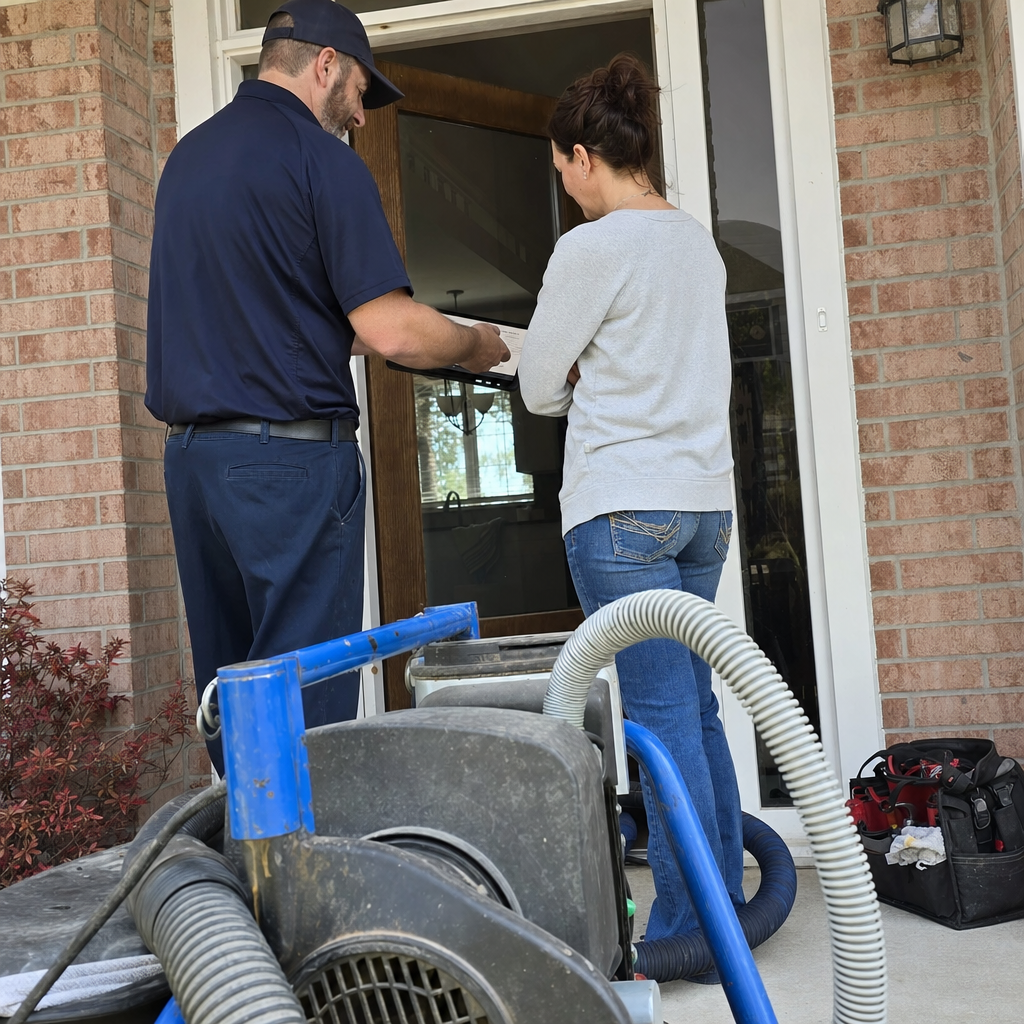
When Henry Wood arrives at your Kansas home, here’s what happens before any cleaning begins:
- Register and return inspection: We remove and photograph each vent cover, checking for visible debris depth, discoloration patterns, and signs of moisture staining that indicate upstream problems.
- Borescope camera deployment: For trunk lines and main returns, we feed a lighted camera 10–30 feet into the duct system to assess liner condition, seam integrity, and contamination type — dust, construction debris, or biological growth.
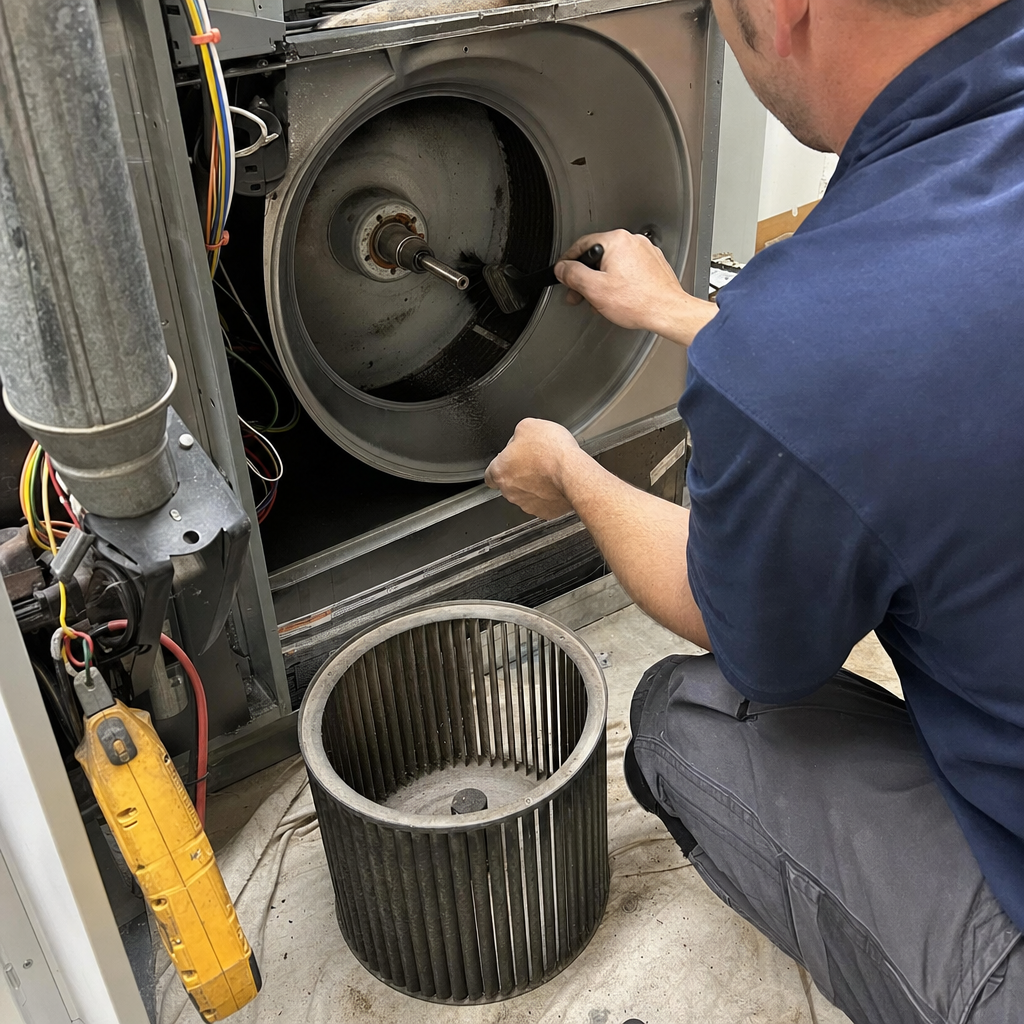
- HVAC component check: We inspect the evaporator coil, blower assembly, and filter rack for bypass debris that would immediately recontaminate cleaned ducts. This is where our HVAC Cleaning in Kansas scope overlaps — many “duct cleaning” companies never open the air handler.
- Equipment selection and setup: Based on findings, we configure the Rotobrush with appropriate brush stiffness, set Nikro vacuum negative pressure to 2,000–3,500 CFM depending on duct diameter, or deploy Abatement Technologies HEPA containment if microbial indicators are present.
This sequence takes 20–40 minutes. It prevents the two most common failures we see from competitors: destroying fragile duct liner with overly aggressive brushing, and leaving significant debris behind because the vacuum pull was insufficient for the duct diameter and layout.
What “Negative Pressure” Actually Means in Your Home
Every duct cleaning company throws around “negative pressure,” but few homeowners understand what it means operationally — and fewer companies execute it correctly.
Negative pressure means the entire HVAC duct system is placed under suction before any agitation begins. We seal the supply and return registers, then connect the Nikro vacuum to create a pressure differential that pulls air (and dislodged debris) toward the collection point rather than allowing it to escape into your living space. The ductwork itself becomes a contained extraction pathway.
Here’s where Kansas climate matters again: in summer, humid duct interiors create surface tension that holds debris to liner walls. Standard vacuum pressure won’t overcome this. We adjust our negative pressure upward and pre-treat with controlled air turbulence to break that bond before brush contact. In winter, desiccated debris releases more easily but becomes airborne faster — we reduce agitation speed and increase capture velocity to prevent re-entrainment.
A shop-vac on a register, which is what some low-price competitors use, creates localized suction at best. It doesn’t establish system-wide negative pressure, which is why those “cleanings” leave 60–70% of debris in place and often blow fine particulate through unsealed gaps into your home.
What HVAC Duct Cleaning Service Costs in Kansas, KS
Furnace Duct Cleaning Cost in Kansas, KS reflects actual system complexity and condition, not square footage alone. These ranges cover what we quote for Kansas City metro homes after inspection:
| Service Component | Price Range |
|---|---|
| Basic residential duct cleaning (single system, 6–12 vents, light debris) | $350–$500 |
| Standard residential cleaning (moderate debris, flex + rigid mixed ductwork) | $450–$650 |
| Heavy contamination / post-renovition cleaning | $600–$850 |
| HVAC component cleaning (coil, blower, cabinet — added to duct service) | $150–$275 |
| Duct sealing identification and minor spot sealing | $75–$200 |
| Sanitizing treatment (performed only when inspection warrants) | $125–$225 |
We don’t quote over the phone without knowing your system layout — anyone who does is guessing. Call (855) 595-7944 and Henry Wood will schedule a free, no-pressure inspection with exact pricing before any work begins.
The Owner-Operator Difference: Why the Same Face Matters
There’s a practical problem with franchise duct cleaning models that nobody talks about: institutional memory. When a different technician crew rotates through your house every 18–24 months, nobody remembers that your 1950s Armourdale bungalow has a sagging trunk line at the second joist bay, or that your Turner ranch needed the return plenum resealed last time, or that your Piper home’s flex duct was upgraded in the east wing but not the west.
Henry Wood has cleaned systems in this market for 17 years. He has notes — mental and written — on hundreds of Kansas homes. When he returns to a house he cleaned five years ago, he knows what he found, what he fixed, and what to check first. That continuity means faster diagnosis, more accurate quotes, and work that builds on previous service rather than repeating discovery.
Our 276 customers reviewed us at 4.8 stars, and the consistent feedback we see is some version of: “Henry told me exactly what he found and what it would take to fix it — no surprise charges, no pushing services I didn’t need.” That’s not a script. That’s what happens when the owner is the one holding the borescope.
Common Scenarios We See in Kansas Homes
These aren’t hypotheticals. These are the actual situations that prompt Kansas homeowners to call us, and how we handle each:
Post-Renovition Dust Overload
The drywall sanding, flooring cuts, and general construction debris from a kitchen or addition project doesn’t stay in the work zone. Your HVAC system was likely running during construction, pulling fine particulate through returns and depositing it throughout the duct network. We find this constantly in Village West and near downtown KCK rehabs. Our protocol: Abatement Technologies HEPA containment, stepped agitation to prevent drywall dust from compacting, and extended vacuum cycles. Often we identify return leaks that pulled the debris in — and seal them before we leave.
Allergy Flare-Ups With No Clear Source
When a family in Rosedale or Strawberry Hill calls because someone’s asthma or allergies have worsened despite medication changes, we know to look at the evaporator coil and blower first. In Kansas humidity, coils become microbial reservoirs that bypass standard filtration. Our HVAC Cleaning scope includes coil and blower inspection; if we find contamination, we clean it as part of the same visit rather than telling you to call another company.
Uneven Heating or Cooling
A bedroom that won’t cool in August or a living room that’s cold in January often traces to duct blockage or leakage, not equipment failure. We’ve found collapsed flex duct in attics, disconnected trunk line sections behind finished basements, and — in one memorable Turner ranch — a section of duct completely packed with a bird nest from a missing vent screen. Camera inspection finds these; guesswork doesn’t.
Visible Dust Reappearing Within Days of Cleaning
This is the telltale sign of incomplete service. If you had ducts “cleaned” six months ago and you’re already wiping gray film off registers, the previous company either missed significant debris, failed to clean the HVAC components, or disturbed deposits without proper negative pressure and recontaminated your home. We see this complaint frequently from customers who started with coupon offers. Our fix: full system assessment, identification of what was missed, and re-cleaning with proper containment — plus documentation of any duct damage that may have contributed.
What Full-Service Duct Care Looks Like in One Visit
Most Kansas homeowners don’t realize how many separate trades duct problems can trigger. A typical scenario: you call for duct cleaning, the tech finds a disconnected return, tells you to call an HVAC company for repair, who then finds a dirty coil and recommends a third call for coil cleaning, who then suggests sanitizing for the microbial growth they found.
Atlas handles the full indoor air quality cycle in one appointment:
- Air Duct Cleaning: Complete supply and return cleaning with inspection-first equipment selection
- HVAC Cleaning: Coil, blower, and cabinet cleaning to prevent immediate recontamination
- Duct Repair and Sealing: Identification and spot-repair of disconnections, leaks, and damaged sections
- Air Quality and Sanitizing: Contaminant treatment with Guardsman products when inspection warrants — never automatic, never upsold
Henry Wood carries the training and equipment to move between these scopes without rescheduling or subcontracting. If your inspection reveals a problem beyond our scope — significant duct reconstruction, for instance — we’ll tell you exactly that, show you why, and recommend the specific trade you need. No vague referrals, no kickback arrangements.
FAQs
For Affordable HVAC Cleaning in Kansas, KS, most homeowners pay between $450 and $650 for a complete residential duct cleaning, with basic systems starting around $350 and heavy post-renovition or contamination jobs reaching $850. The exact price depends on your duct layout, the type of debris we find, and whether additional services like HVAC component cleaning or sanitizing are warranted. Call (855) 595-7944 for a free inspection and exact quote — estimates are always free.
Spot repairs and sealing typically cost $75–$400 and resolve most issues we find in Kansas homes, including disconnected sections, minor liner damage, and seam gaps. Full duct replacement runs $3,000–$7,000+ and is only necessary when systems are extensively corroded, collapsed, or improperly sized — most common in pre-1960 galvanized steel or failing fiberboard. We always attempt repair first and document with photos so you can see exactly why replacement is or isn’t needed. Call (855) 595-7944 to schedule an inspection.
We typically schedule inspections within 24–48 hours and complete most cleaning jobs same-day once we’ve assessed your system. Emergency situations — post-fire restoration, severe airflow blockage, or property manager tenant turnover — get priority scheduling when possible. Henry Wood handles scheduling directly, so you’re not waiting for a dispatch center to find an available crew. Call (855) 595-7944 and we’ll get you on the calendar.
Signs of incomplete or improper cleaning include visible dust returning within weeks, registers that weren’t removed or were scratched during service, no inspection documentation or photos, and technicians who finished a “whole house” job in under two hours. Proper duct cleaning for an average Kansas home takes 3–5 hours including inspection, setup, cleaning, and verification. We provide before-and-after photos from our borescope and show you the debris volume collected. If you’re uncertain about past work, call (855) 595-7944 for an assessment — we’ll tell you honestly whether re-cleaning is needed or if your system is in good shape.
Ready to See What’s Actually in Your Ducts?
Henry Wood, owner and lead technician at Atlas Air Duct & Vent Cleaning Kansas, has been crawling into duct systems across Wyandotte and Johnson counties for 17 years. We don’t quote blind, we don’t upsell services you don’t need, and we don’t send anyone to your home who hasn’t spent years learning what Kansas climate and housing stock do to ductwork. Call (855) 595-7944 today for your free inspection and exact estimate — most jobs are completed same-day, and you’ll know exactly what we found before we start any work.
Written by Henry Wood, Owner & Lead Technician at Atlas Air Duct & Vent Cleaning Kansas, serving Kansas, KS.