
Is Air Duct Cleaning Worth It in Kansas, KS? The Honest Answer Depends on What’s Actually Inside Your System
Air duct cleaning is worth the cost when your system contains verifiable contamination—visible mold, pest debris, or post-renovation dust—but it’s not automatically worth it for every home on a set schedule. In Kansas, where seasonal temperature swings force HVAC systems to work harder than in milder climates, the real question isn’t whether duct cleaning is universally good or useless; it’s whether your specific system has accumulated enough debris to restrict airflow, harbor allergens, or recirculate particles your filter isn’t catching. If you’re unsure what’s in there, call Atlas Air Duct & Vent Cleaning Kansas at (855) 595-7944 for a no-pressure assessment—we’ll show you exactly what we find before you spend anything.
Why “It Depends” Is the Only Honest Answer
We’ve been in enough duct systems around here to know what clean looks like—and most of what we open up isn’t it. That doesn’t mean every home needs immediate cleaning. The blanket “yes” from franchise duct cleaners and the blanket “no” from some research summaries are both answering a question that requires diagnosis first.
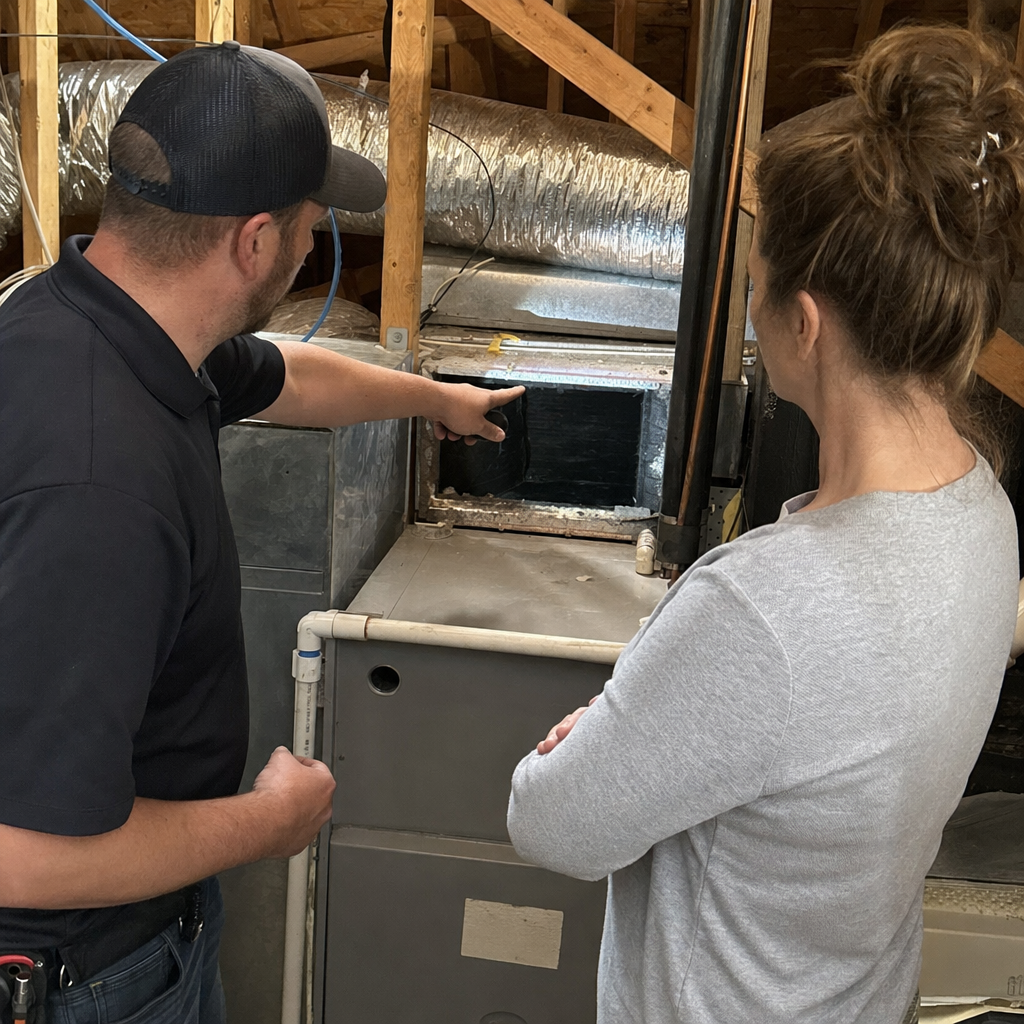
Henry Wood, our owner and lead technician, has told homeowners straight-up that their system wasn’t worth cleaning yet. A three-year-old replacement system in a Fairway home with pristine internals? He showed them the camera footage, explained what to watch for, and scheduled a follow-up for two years out. A 1980s ranch in Rosedale with compacted dust mats at every supply register? That one got cleaned the same day.
The difference comes down to three diagnosable conditions. When one of these is present, “worth it” has a defensible, measurable answer:
- Visible mold growth inside hard-surface ducts or on other HVAC components — Not the dark dust streaks near registers that everyone has; actual fungal colonization, which we confirm before recommending remediation-level cleaning with our Abatement Technologies containment setup.
- Confirmed rodent or insect infestation debris — Droppings, nesting material, or carcasses that break down and become particulate matter your system distributes room to room. We’ve pulled intact mouse nests from return plenums in older Kansas City, Kansas homes near the Kaw River.
- Post-renovation construction dust contamination — Drywall dust, sawdust, and insulation particulate that bypassed whatever protection was used during work. This material compacts in duct floors and doesn’t flush out on its own.
Outside these three scenarios, the value proposition gets more conditional—and that’s where most Kansas homes actually live.
What the EPA Actually Says (And What It Means for Your Kansas Home)
The EPA’s position is frequently misquoted by both sides. Their actual statement: duct cleaning has not been proven to prevent health problems, and no research conclusively demonstrates that particle levels in homes increase because of dirty air ducts. They also note, less quoted, that much of the dirt in air ducts adheres to duct surfaces and does not necessarily enter the living space.
Here’s what that means practically for Kansas homeowners, not in research language:
Most Kansas City metro homes have never had their ducts cleaned. Not once. In 17 years of opening systems, we’ve found that “clean enough” and “actually clean” are different standards. The EPA is correct that a thin film of dust on duct walls isn’t automatically a health crisis. What they don’t address is the accumulation that happens over 20, 30, or 40 years in a climate where furnaces run hard five months a year and air conditioners fight humidity another four or five.
In Kansas, that accumulation isn’t just surface dust. It’s compacted debris on duct floors—particularly in the flexible ductwork common in 1990s and 2000s construction—where low spots create traps that airflow never fully clears. It’s supply registers in second-floor bedrooms that wheeze out less air than they did when the system was new. It’s the return air plenum where your filter sits, with bypass debris settled around the housing because the filter never sealed perfectly.
We’ve camera-inspected systems in Merriam where the duct floor had a half-inch mat of compacted dust and pet dander. Not toxic. Not an emergency. But absolutely restricting airflow enough that the blower motor worked harder, the house had persistent hot spots, and the family ran their system longer to compensate. That’s where “worth it” shifts from health claim to mechanical and efficiency reality.
What We Actually Find in Kansas Homes: A Field Report
Henry doesn’t pull out horror stories to scare people. What he shows customers is usually more mundane—and more useful for deciding whether to clean.
A typical never-cleaned system in Kansas, Kansas or the surrounding metro:
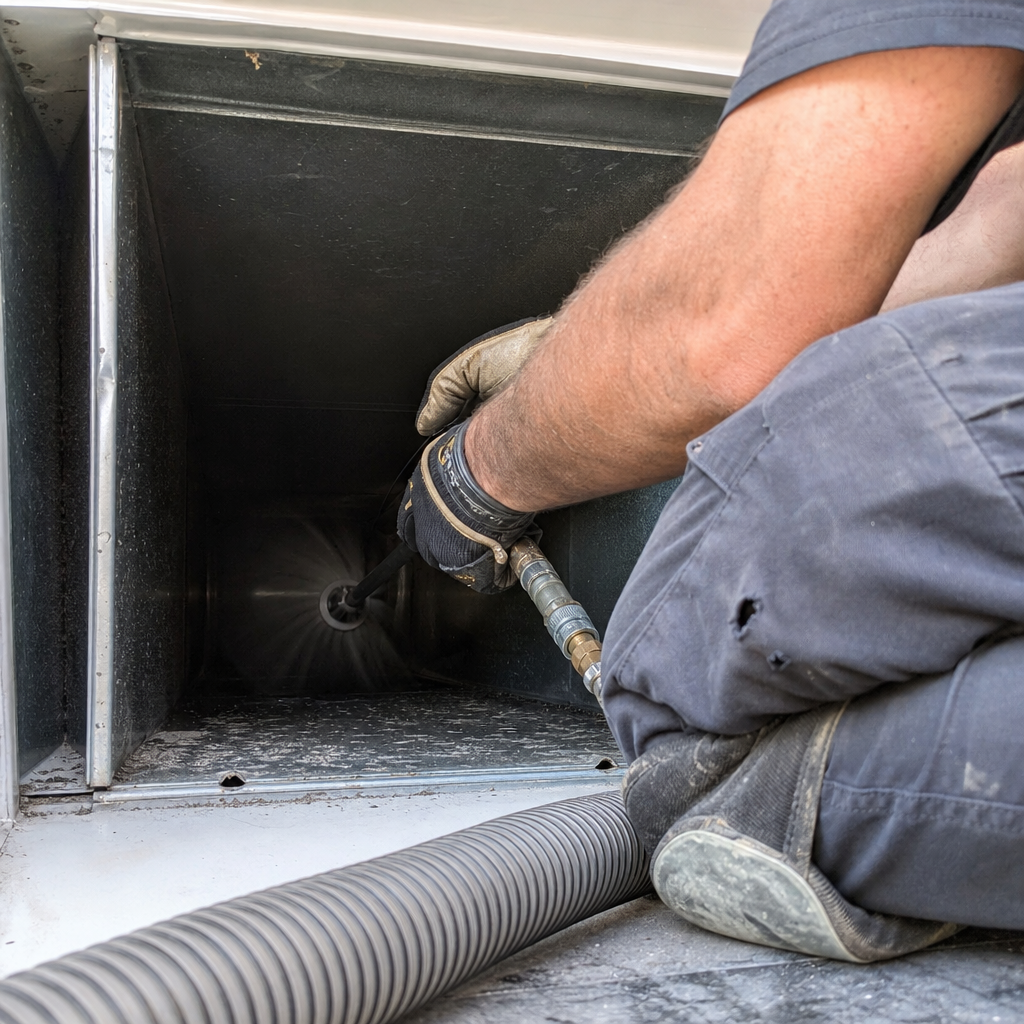
- Compacted dust on duct floors, especially at low points and where flexible duct sags between supports. This material doesn’t blow out; it’s too heavy once settled. Our Rotobrush contact-cleaning system agitates it loose, and the Nikro negative-pressure vacuum pulls it out before it can migrate into the house.
- Debris accumulation at supply diffusers — the visible slats where air enters your rooms. If you can wipe black dust from these with a finger, there’s more upstream where you can’t reach.
- Filter bypass debris around the return housing — even “good” filters don’t seal perfectly, and every gap allows unfiltered air to deposit material in the plenum and blower cabinet.
- Construction residue in newer homes — we’ve found drywall mud chunks and insulation fragments in systems less than five years old, particularly in developments where final cleanup was rushed.
What we don’t find, despite what some marketing suggests: wall-to-wall black mold in every system. Mold requires moisture, and most Kansas ductwork runs dry enough that widespread colonization is rare. When we do find it—usually near humidifier leaks or condensate pan failures—we flag it for remediation-protocol cleaning with our Abatement Technologies equipment, not standard duct cleaning.
Your Pre-Call Diagnostic: Check These Three Things
Before you call any duct cleaner—including us—run through these observable checks. They’ll tell you whether you’re likely in the “worth it” category or the “monitor and wait” zone:
Check your return air filter housing for bypass debris. Pull the filter out and look at the surfaces around it, not just the filter itself. If you see a layer of dust and debris on the housing walls, air is getting around your filter and depositing material upstream. That’s a signal that cleaning will remove accumulated bypass material you can’t reach yourself.
Pull a supply register and look at the duct floor. Use a flashlight or your phone. You’re looking for a layer of settled material, not just dark walls. If the duct floor has visible debris you could scoop with a spoon, that’s accumulated load that contact cleaning will remove.
Note whether heating or cooling season starts with a dusty smell. The first 24-48 hours of runtime after months of sitting often dislodges settled material. If that smell persists beyond a day, or returns strongly each season, your system is recirculating debris that isn’t staying put on duct walls.
None of these require tools or expertise. They’re specific, observable signals that move you from “I wonder if…” to “I can see there’s something there.”
When We’ve Told Customers It Wasn’t Worth It Yet
This is where our approach differs from franchise operations that book every call. Henry has walked away from jobs where cleaning wouldn’t provide measurable value:
Relatively new systems (under 5 years) with clean internals. A 2021 installation in Prairie Village had factory-fresh ductwork and a blower cabinet that still had the installation sticker visible. We showed the homeowner the camera feed, explained what to watch for, and scheduled a free recheck in three years.
Systems recently replaced after flooding or damage. A Leawood home had all ductwork replaced six months prior after a water heater leak. The new flex duct was pristine; cleaning would have been purely cosmetic and we said so.
Systems with genuinely clean internals on inspection. Rare, but it happens—usually homes with obsessive filter changes, no pets, and no recent construction. We’ve done maybe a dozen of these in 17 years.
The straight-talking position isn’t a marketing angle. It’s the practical reality of owner-operated work where the person making the recommendation is the same one doing the job. Henry’s reputation in Kansas, Kansas and the broader metro depends on not selling unnecessary work to neighbors he’ll see again at the Rosedale Barbecue counter.
What Professional Duct Cleaning Actually Costs and Involves in Kansas
If your diagnostics suggest cleaning is warranted, here’s what the process and How Much Does Air Duct Cleaning Cost? (2026 Price Guide) — Kansas, KS look like for Kansas metro homes:
| Service Component | Typical Range | What Affects Price |
|---|---|---|
| Standard residential duct cleaning (single system, 1,500–2,500 sq ft) | $350–$550 | Number of supply/return registers, accessibility of main trunk lines, amount of debris |
| Larger homes or multi-zone systems (3,000+ sq ft) | $550–$850 | Additional air handler, zone dampers, extended duct runs |
| Dryer vent cleaning (add-on or standalone) | $125–$225 | Length of run, number of turns, roof vs. wall termination |
| Contaminant sanitizing with Abatement Technologies equipment | $150–$300 | Applied after cleaning for mold-prone systems or allergy-sensitive households |
| Duct repair/sealing (when damage found during cleaning) | $200–$600+ | Extent of disconnected runs, sealant application, access difficulty |
These ranges reflect Kansas metro market rates in 2024–2025. We provide exact quotes after inspection, not ballpark figures that change on arrival. Our Air Duct Cleaning page details the full process if you want equipment specifics.
The value calculation isn’t just the cleaning cost against “feeling better.” It’s cleaning cost against:
- Reduced blower motor strain and extended HVAC component life
- More consistent airflow to rooms that currently underperform
- Elimination of debris recirculation during seasonal startup
- One completed service instead of repeated filter changes that don’t address upstream accumulation
Common Local Scenarios We See in Kansas Homes
These patterns repeat often enough that they’re worth naming directly:
The 1970s–1980s ranch with original galvanized ductwork. Common in Rosedale, Argentine, and older Overland Park neighborhoods. These systems have decades of accumulation, often with rust scale mixed into debris. Cleaning restores airflow but also reveals spots where duct integrity is failing—something we can repair in the same visit rather than leaving you to coordinate a second contractor.
The recent renovation with “we covered the vents” assurance. Drywall dust is fine enough to penetrate even careful protection. We find it packed into return lines months after contractors have left, particularly in open-concept homes where dust traveled farther than expected.
The allergy household that changed filters religiously but never looked upstream. High-MERV filters catch what passes through them, but bypass debris and accumulated load in the plenum still circulates. We’ve had customers tell us their Aprilaire or Honeywell filter “should handle it”—and it does, for the air that actually passes through. The rest is what we remove.
The rental turnover with unknown history. Property managers in Kansas, Kansas call us when tenants report persistent dust or odors that don’t resolve with surface cleaning. Often it’s years of accumulated debris from previous occupants, including pet dander and cooking residue embedded in duct floors.
Equipment and Process: What You’re Actually Paying For
The difference between worth-it and wasted-money duct cleaning often comes down to equipment and who’s operating it. Our setup reflects 17 years of refinement for Kansas metro conditions:
We use professional-grade Rotobrush contact-cleaning systems for agitation—physical brushes that scrub debris loose from duct walls, not air wands that blow past compacted material. The Nikro negative-pressure vacuum operates at remediation-level suction, capturing dislodged debris before it can escape into your living space. For homes with mold concerns or post-remediation verification, our Abatement Technologies particulate containment and HEPA filtration meets the same standards restoration contractors use after water damage.
Henry operates this equipment personally on every job. There’s no rotating crew of trainees. When you book Atlas, you’re getting the person with 17 years of accumulated knowledge about what Kansas duct systems actually contain and how to remove it without damaging aging components.
From cleaning to repair to sanitizing—handled in one visit. If we find a disconnected flex duct run or a failed seal at the plenum, we fix it while we’re there. No second appointment, no coordination with another contractor, no additional trip charge.
FAQs
Standard residential Affordable Air Duct Cleaning in Kansas, KS typically runs $350–$550 for a single-system home between 1,500 and 2,500 square feet, with larger homes or multi-zone systems ranging from $550–$850. The exact price depends on your register count, duct accessibility, and debris load—we inspect first and quote firm before starting any work. Call (855) 595-7944 for a free estimate.
It can reduce allergen circulation if your ducts contain accumulated pet dander, pollen, or dust mite debris that your filter isn’t catching—but it’s not a guaranteed cure for allergies, and the EPA notes no research proves duct cleaning prevents health problems in the absence of specific contamination. We’ve seen customers report improvement, particularly when combined with upgraded filtration, but we don’t promise medical outcomes. What we can verify is removing measurable debris load that was recirculating through your system.
There’s no universal schedule that fits every home. The NADCA suggests every 3–5 years as a general guideline, but we’ve found Kansas homes with minimal accumulation at 8 years and others with significant load at 3 years due to construction, pets, or filter bypass. We recommend the diagnostic checks above—filter housing debris, supply register dust, seasonal startup odors—as your actual indicators rather than calendar dates. When those signals appear, it’s time for inspection.
More frequent filter changes help but don’t address material already accumulated upstream of the filter. If your return plenum and duct floors contain years of bypass debris, a new filter only catches what passes through it from now on—it doesn’t remove what’s already settled. For homes with significant accumulation, filter upgrades plus professional cleaning address both the existing load and future prevention. For relatively clean systems, better filtration alone may be sufficient.
When You’re Ready to Know What’s Actually in There
The honest answer to “is air duct cleaning worth it” isn’t a headline—it’s what we find when we open your specific system. We’ve built our reputation in Kansas, Kansas and across the metro on showing homeowners exactly that, then letting them decide with real information rather than pressure.
If you’d rather have it looked at, Atlas Air Duct & Vent Cleaning Kansas offers a no-pressure assessment in Kansas—call (855) 595-7944 or visit our home page to learn more about our full service scope. Henry Wood will be on your job, camera in hand, ready to show you what clean looks like and whether your system measures up.
Written by Henry Wood, Owner & Lead Technician at Atlas Air Duct & Vent Cleaning Kansas, serving Kansas, KS.