
How Often Should Air Ducts Be Cleaned in Kansas? The Real Interval Depends on What Your System Is Actually Doing
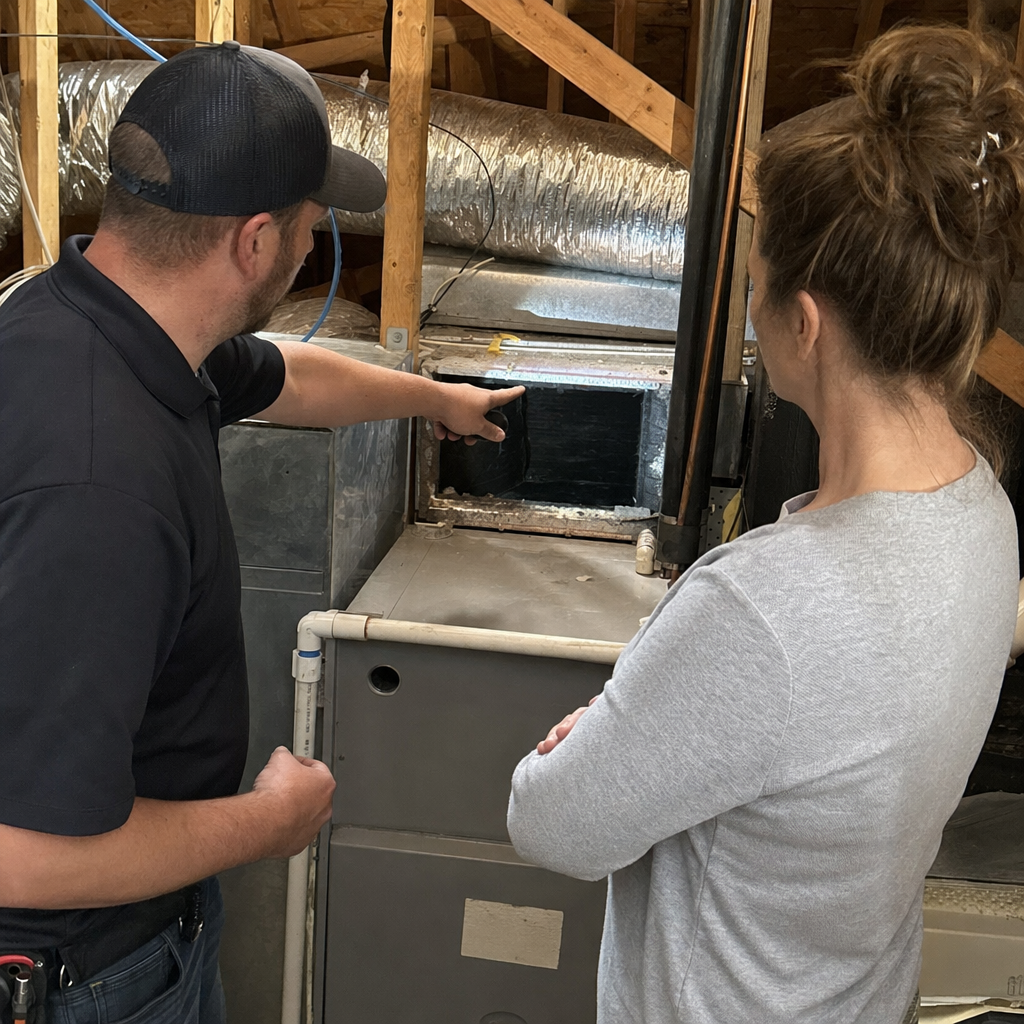
If you’re wondering Is Air Duct Cleaning Worth It? (Kansas, KS), consider that most Kansas homes need it every 3 to 5 years as a baseline, but the honest interval is determined by your HVAC runtime, filter quality, pet load, and whether you’ve had recent renovation work—not a calendar date. In the Kansas City metro, where heating systems run hard through January and February and air conditioning fights humid summers from June through September, accumulated runtime often pushes that interval shorter. If you’re noticing reduced airflow, visible dust at registers, or worsening allergy symptoms, your ducts are telling you something the calendar can’t. Call Atlas Air Duct & Vent Cleaning Kansas at (855) 595-7944 for a no-pressure assessment—we’ll show you exactly what’s inside your system.
Why “Average” Doesn’t Mean Much for Kansas City Homes
The 3-to-5-year recommendation you’ll see on every franchise website assumes a house with moderate use, mild seasons, and a basement that stays dry. That house doesn’t really exist here. Kansas City sits at the confluence of aggressive seasonal patterns: spring pollen counts that regularly spike into the “very high” range, summer humidity that keeps AC compressors cycling into October, and winter temperature swings that force furnaces to work overtime.
Our housing stock adds another layer. The Rosedale neighborhood where Henry Wood grew up, plus surrounding areas like Argentine, Turner, and Piper, includes thousands of post-war bungalows and ranch homes with original ductwork or partial replacements. Many of these systems have basement return air plenums sitting at ground level, pulling in humidity, concrete dust, and whatever’s settled in the crawl space. Others have flex duct additions from the 1980s and 90s that have begun to sag between joists, creating low spots where debris pools and restricts airflow.
We’ve been in enough duct systems around here to know what clean looks like—and most of what we open up isn’t it.
What Actually Accelerates Your Cleaning Interval
Here’s what we look for when we’re deciding whether a Kansas system needs cleaning now or can wait:
- Pet dander load: One shedding dog produces enough dander to coat duct walls in 18-24 months, not 3-5 years. Multiple pets compress that timeline significantly. We regularly find pet hair packed into the first elbow from the supply plenum in homes with Labradors, Golden Retrievers, and German Shepherds—breeds common in Kansas City’s family neighborhoods.
- Recent renovation: Drywall dust, insulation particulate, and flooring debris bypass even good filters during construction. We’ve opened systems six months after a kitchen remodel and found half-inch deposits of joint compound dust at the blower cabinet. If you’ve had work done, the clock resets.
- Basement return air systems: Common in Kansas City split-levels and ranches, these pull air from ground level where humidity and particulate concentrate. We’ve measured return plenums in Merriam and Overland Park homes with visible mold staining and debris depths that clearly predate the current owner’s purchase.
- HVAC runtime hours: Kansas City’s dual-season demand means systems here accumulate more total runtime than equivalent homes in milder climates. A system running 2,800-3,200 hours annually versus 1,800-2,000 hours in coastal California moves proportionally more debris through the same ductwork.
- Filter quality and maintenance: This deserves its own section—see below.
The Filter Upgrade Trap Most Advice Ignores
You’ll hear plenty of “just upgrade to a MERV 13 filter and forget about duct cleaning.” We need to address this directly because it’s half-true at best and potentially expensive at worst.
A MERV 13 filter does capture smaller particulate than a standard fiberglass panel filter. In a Kansas home with allergy-sensitive occupants, that matters. What the standard advice doesn’t tell you: MERV 13 also creates significantly more static pressure resistance. We’ve serviced systems in Prairie Village and Leawood where homeowners installed high-MERV filters on equipment never designed for that load, and the result was a blower motor working harder, heat exchangers running hotter, and premature equipment failure.
The tradeoff is real. A properly sized system with a MERV 11-13 and a deep media cabinet (Honeywell or Aprilaire make the ones we install most often) can reduce duct debris accumulation by 30-40% compared to a cheap panel filter. But it doesn’t eliminate the need for cleaning—it extends the interval, and only if the filter gets changed on schedule. We’ve found filters installed two years ago, completely loaded, with the homeowner wondering why the “good filter” didn’t work.
Our working rule: match the filter to the system, not the marketing. If your ductwork needs cleaning, a better filter afterward helps maintain the results. It doesn’t replace the cleaning.
What Henry Looks at to Set Your Next Cleaning Date
When we’re on a job, we document three specific points that determine when a system should be cleaned again. This isn’t guesswork—it’s what we’ve learned from 17 years inside duct systems across Johnson and Wyandotte counties.
Debris Depth at the First Supply Bend
The first 90-degree elbow from the supply plenum is where velocity drops and particulate settles. We measure accumulation here with a borescope camera. In a system that hasn’t been cleaned in 4-5 years, we’ll typically find 3-8mm of compacted dust and debris. In homes with pets or recent renovation, that depth can hit 15mm in under two years. If we can see the metal through the debris, you’re in good shape. If the duct looks like a felt-lined tube, the system’s working harder than it should.
Filter Bypass Evidence at the Blower Cabinet
We open the blower compartment on every assessment. If dust has accumulated on the blower wheel, motor housing, or evaporator coil, that’s filter bypass—air finding paths around the filter rather than through it. Common causes: poorly fitted filters, filter cabinets that don’t seal, or homeowners running the system without a filter during changeouts. Bypass means debris is moving through the entire duct system unfiltered, and the cleaning interval shortens accordingly.
Flex Duct Sag and Debris Pooling
Kansas homes with flex duct additions—common in finished basements and attic conversions—often show sagging between supports. Flex duct has a corrugated interior that traps debris, and when it sags, you get literal pools of accumulated dust and dander. We’ve found sections in Shawnee and Lenexa homes where the sag was so severe airflow was reduced by 40% before the homeowner even noticed comfort issues. This isn’t a filter problem; it’s a duct integrity problem that cleaning reveals.
Henry’s Working Rule for Kansas City Resale Homes
Regardless of what the previous owner told you, if you bought a resale home in Kansas, your ducts need cleaning. Full stop. You don’t know the maintenance history, the filter habits, whether pets lived there, or if a DIY renovation dumped drywall dust into the returns. We’ve cleaned systems in homes where the new owners were told “ducts were cleaned two years ago” and found debris indicating a decade of neglect.
After that initial cleaning, we set intervals based on the variables above, not a calendar. A single-person household in a newer build with a good filter and no pets might reasonably go 4-5 years. A family with two dogs, a basement return system, and a preference for open windows during spring pollen season might need attention every 18-24 months.
This is why we don’t sell maintenance contracts with fixed dates. We document what we find, show you the photos, and tell you what to watch for. When you’re ready, we’re here. Air Duct Cleaning from Atlas means assessment first, cleaning second, and honest guidance about what comes next.
What Professional Duct Cleaning Costs in Kansas—and What You Actually Get
Price matters, but “cheap” duct cleaning in Kansas City is usually a vacuum hose waved at your registers for 45 minutes. We’ve been called in after those jobs to finish what they started. Here’s what thorough cleaning actually involves and what it costs:
| Service Component | Typical Range in Kansas | What’s Included |
|---|---|---|
| Standard residential duct cleaning (single system, up to 12 vents) | $350 – $550 | Supply and return ductwork, register covers, blower compartment, visual inspection with borescope |
| Large home or dual-zone system (13-20 vents) | $550 – $850 | Extended duct network, additional access points, zone damper inspection |
| Dryer vent cleaning (recommended with duct service) | $120 – $180 | Full lint removal from duct to exterior termination, airflow verification |
| Contaminant sanitizing (mold/odor treatment) | $150 – $300 | EPA-registered application, Abatement Technologies containment during treatment |
| Duct repair and sealing (as needed) | $200 – $600 | Flex duct replacement, mastic sealing of leaks, support reinforcement |
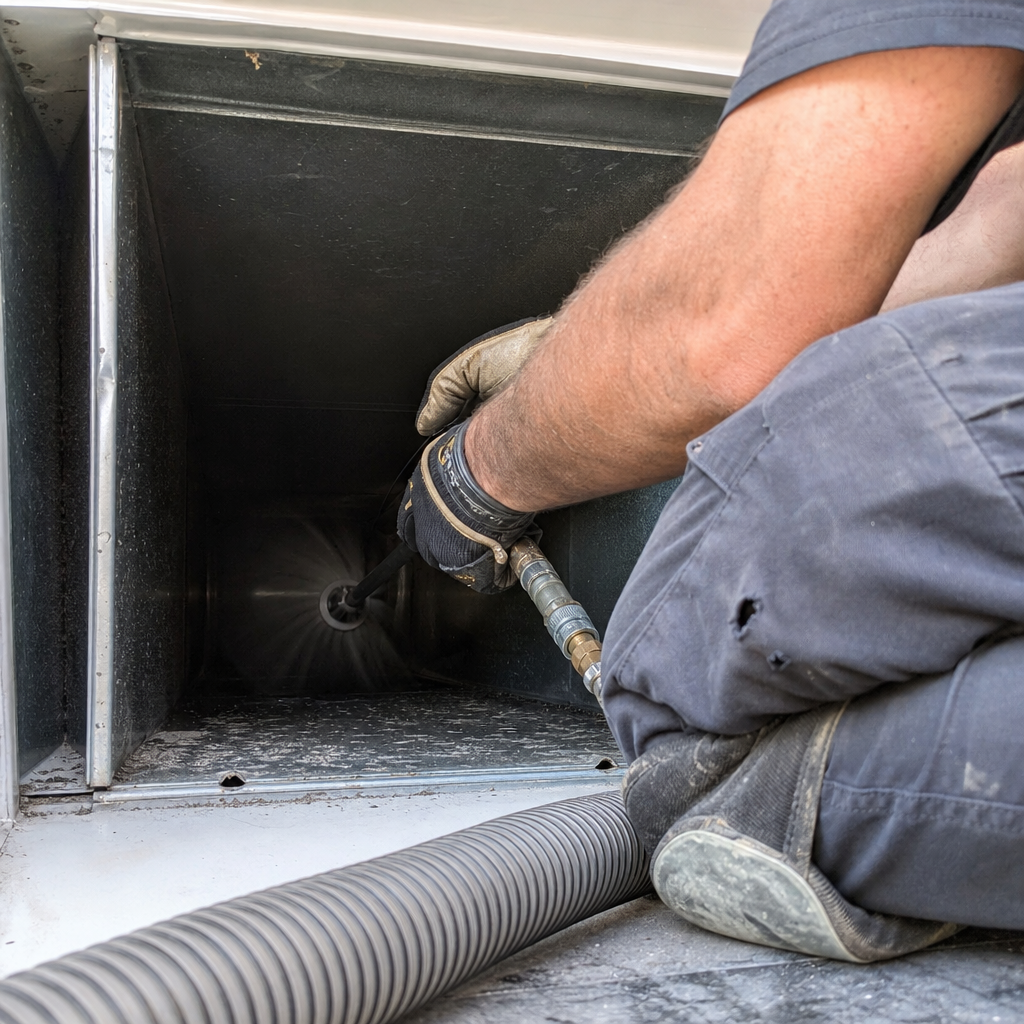
We use Rotobrush contact-cleaning systems for mechanical agitation inside duct walls, paired with Nikro negative-pressure vacuums that pull debris out of your home entirely—not into your living space. For homes with contamination concerns, our Abatement Technologies equipment provides remediation-level particulate control. Henry Wood, owner and lead technician, is on every job. You’re not getting a dispatched crew member learning the trade; you’re getting 17 years of accumulated knowledge about what Kansas duct systems actually do.
Signs Your Kansas Home Needs Duct Cleaning Now
Calendar recommendations aside, your system will tell you when it’s time. Here’s what to check:
- Visible dust at supply registers: If you’re wiping dust from vents monthly, it’s coming from inside the ductwork, not your living space.
- Uneven heating or cooling: Rooms that won’t stay comfortable often have restricted duct runs. We’ve found complete blockages in Kansas homes where a previous owner’s “repair” was stuffing a towel into a duct to redirect airflow.
- Allergy symptoms that worsen when the system runs: If you feel better with the HVAC off, your ducts are likely circulating accumulated allergens.
- Musty or stale odors on startup: This indicates organic growth or debris decomposition in the system, common in humid basement returns.
- Recent rodent or insect activity: Droppings and debris in ductwork are health hazards that require professional remediation, not just cleaning.
FAQs
Most Kansas homes pay between $350 and $550 for thorough cleaning of a single HVAC system with up to 12 vents, with larger homes or dual-zone systems ranging from $550 to $850. The exact price depends on system accessibility, debris level, and whether additional services like dryer vent cleaning or sanitizing are needed. Call Atlas Air Duct & Vent Cleaning Kansas at (855) 595-7944 for a free, no-pressure estimate—we’ll assess your specific system and give you an exact number.
Dirty air ducts can aggravate allergies, asthma, and respiratory sensitivity by circulating accumulated dust, pollen, pet dander, and mold spores throughout your home. We’ve found systems in Kansas homes with visible mold staining, rodent droppings, and insect debris that pose genuine health risks beyond simple discomfort. If you or a family member has unexplained respiratory symptoms that worsen when the HVAC runs, professional assessment is warranted—call (855) 595-7944 and we’ll show you exactly what’s in there.
Repair is usually more cost-effective for isolated issues like disconnected flex duct, small leaks, or sagging sections, while full replacement makes sense when ductwork is extensively damaged, improperly sized, or contains asbestos-containing materials common in pre-1980 Kansas homes. During our cleaning assessments, we inspect for these conditions and can handle duct repair and sealing in the same visit—no second contractor needed. If replacement is necessary, we’ll tell you honestly and explain why.
A thorough residential duct cleaning typically takes 3 to 5 hours for a standard Kansas home, not the 45-minute “blow-and-go” jobs some companies advertise. We spend that time because we’re doing actual contact cleaning with Rotobrush agitation, negative-pressure debris removal with Nikro systems, and documented inspection of each component. Rushing the job leaves debris behind and can damage ductwork. When Henry Wood is on your job, the time is spent doing it right, not getting to the next appointment.
Ready to Know What’s Actually in Your Ducts?
The calendar can’t tell you when your ducts need cleaning—your system can, and so can a qualified assessment. Atlas Air Duct & Vent Cleaning Kansas has served Johnson and Wyandotte counties for 17 years with owner-operated expertise, professional-grade equipment, and the honest guidance that comes from having no franchise quotas to meet. Our 276 customers have reviewed us at 4.8 stars because we show them what we find and let them decide what to do about it.
If you’d rather have it looked at, Atlas Air Duct & Vent Cleaning Kansas offers a no-pressure assessment in Kansas—call (855) 595-7944 for a free estimate.
Written by Henry Wood, Owner & Lead Technician at Atlas Air Duct & Vent Cleaning Kansas, serving Kansas, KS.