
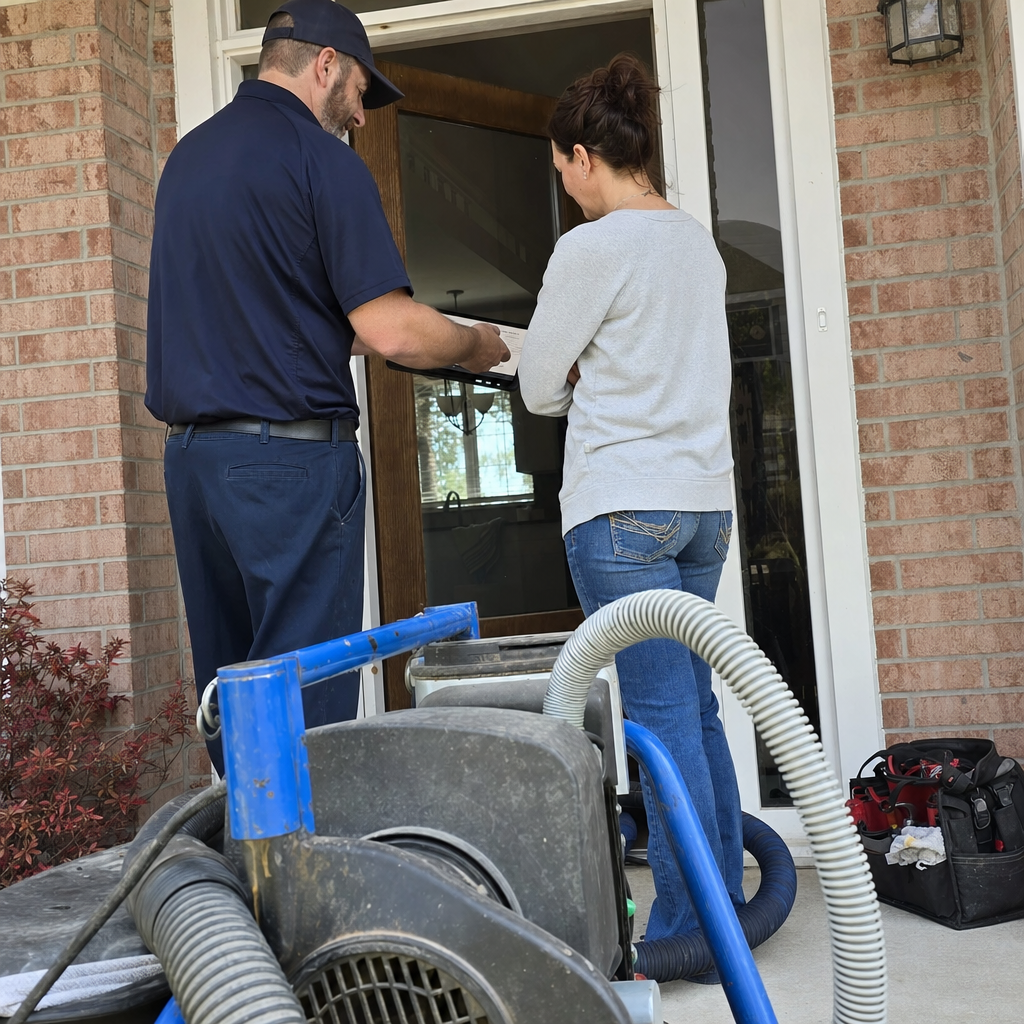
Air Duct Sanitizing Service in Kansas, KS — When You Actually Need It and What It Costs
Air duct sanitizing service in Kansas, KS typically runs $275–$485 when performed correctly as a follow-up to mechanical cleaning, not as a standalone fogging treatment. Most homeowners who call us at (855) 595-7944 asking for “sanitizing” actually need thorough contact cleaning first — spraying antimicrobial into dirty ductwork is like spraying Lysol on a floor you haven’t swept. Henry Wood, owner and lead technician at Atlas Air Duct & Vent Cleaning Kansas, will tell you straight whether your system warrants chemical treatment or if our Air Quality & Sanitizing services with mechanical cleaning using our Rotobrush and Nikro systems will solve the problem.
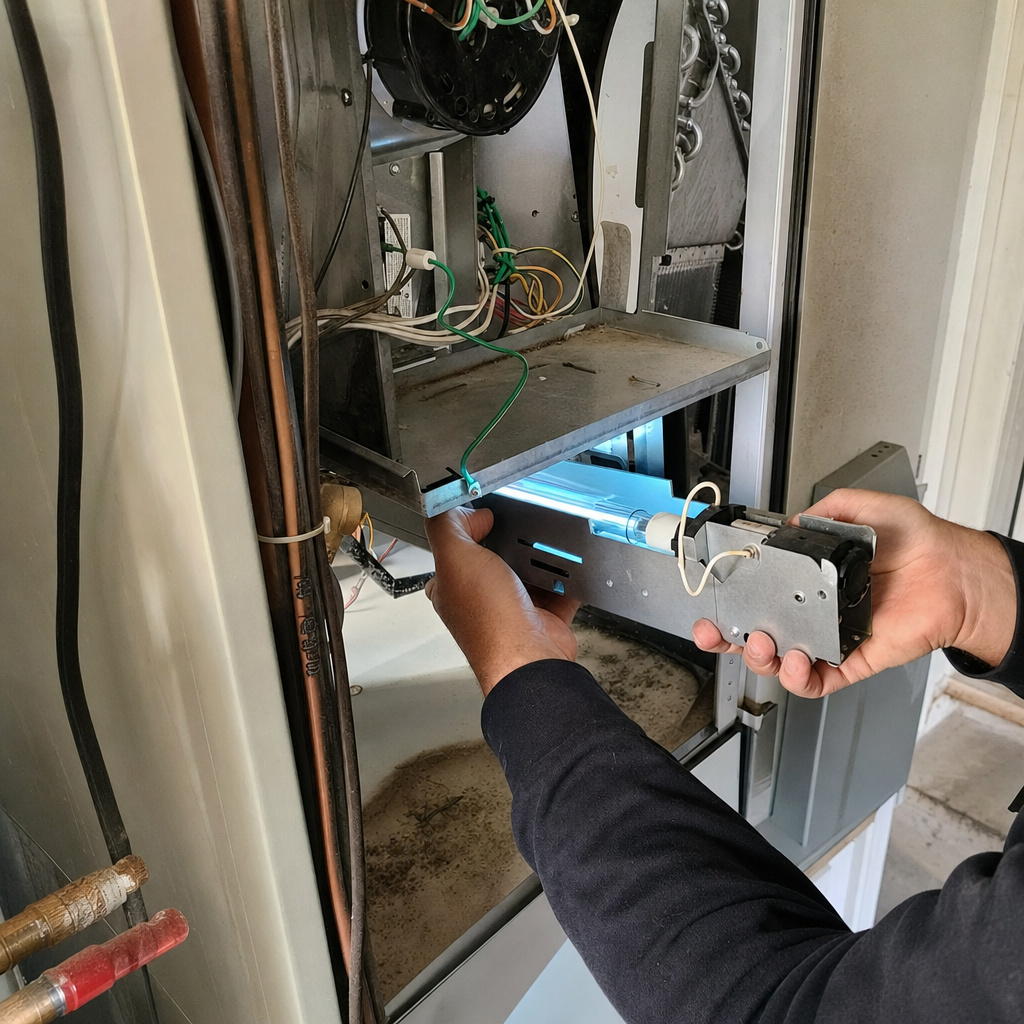
Why “Sanitizing” Is the Most Misused Word in the Duct Cleaning Business
We’ve lost count of the number of Kansas homeowners who’ve already paid another company for “sanitizing” and still smell must when the furnace kicks on. Here’s what happened: a technician fogged an EPA-registered disinfectant through their supply vents, collected their fee, and left. The antimicrobial coated the visible surfaces, sure. But it never reached the biofilm layer — that slimy, adhered colony of mold or bacteria growing on the duct wall beneath the dust and debris.
That biofilm is the problem. And no fogging agent penetrates it without mechanical agitation first.
In the Rosedale neighborhood where Henry grew up, and across older Kansas City, Kansas neighborhoods like Argentine and Turner, we see this constantly. Homes built before the 1980s often have galvanized ductwork with rough interior surfaces — perfect for debris accumulation. The return air systems in these houses frequently pull from basements or crawl spaces that sit above 60% relative humidity for months each summer. Once that humidity threshold holds steady, mold spores germinate. By the time you smell it, you’re not dealing with loose surface dust. You’re dealing with adhered growth.
We’ve been in enough duct systems around here to know what clean looks like — and most of what we open up isn’t it.
The Correct Sequence: Clean First, Then Evaluate for Sanitizing
At Atlas, our process never starts with chemicals. Here’s the actual order:
- Step 1 — Mechanical contact cleaning: Our Rotobrush system scrubs the duct interior with a rotating brush head while the Nikro negative-pressure vacuum extracts dislodged debris at the point of contact. This isn’t a shop-vac at the vent grille. This is source-removal cleaning that physically strips the biofilm’s foundation.
- Step 2 — Containment verification: During cleaning, we run Abatement Technologies HEPA air scrubbers to capture particulate that would otherwise recirculate. In a mold-contaminated system, disturbing debris without containment just spreads spores through the house.
- Step 3 — Post-cleaning assessment: Henry inspects the ductwork with a borescope camera. If the metal is clean, dry, and shows no active growth, sanitizing is unnecessary. If we find residual contamination in an isolated section — say, a basement return that took water intrusion — we target-treat that specific area.
The EPA’s position is clear: registered antimicrobial products exist for duct systems, but the agency does not recommend routine sanitizing. We agree. Chemical treatment is a tool for specific contamination scenarios, not a standard upsell.
When Sanitizing Is Warranted — and When We Tell You to Save Your Money
Henry’s approach has always been straightforward: recommend what the house actually needs, even when it’s less than what the customer called asking for. Here are the real scenarios we encounter in Kansas homes:
Post-flood or water intrusion — Yes, sanitizing is warranted. When ductwork has been wet for more than 24–48 hours, mold growth is nearly certain. Even after mechanical cleaning and thorough drying, residual spores can remain in porous insulation or at joint seams. In these cases, we apply an EPA-registered antimicrobial to affected sections and verify with post-treatment inspection. The Abatement Technologies containment setup matters here — disturbed mold spores during cleaning must be captured, not just pushed around.
Post-rodent activity — Yes, but with caveats. Mouse or rat droppings in ductwork present a hantavirus risk during disturbance. We use full PPE and negative-air containment, remove contaminated insulation if present, then clean mechanically. Sanitizing follows only in sections where urine or nesting material has adhered to the duct surface. Sometimes the answer is duct replacement, not cleaning.
Post-construction with drywall dust — No, mechanical cleaning is sufficient. Drywall dust is particulate, not biological contamination. Our Rotobrush and Nikro system removes it completely. Adding sanitizing here is pure upsell, and we’ll tell you so.
General allergy concerns without visible contamination — Usually no. If your ducts are dirty, cleaning helps. If they’re clean and you’re still symptomatic, the problem is likely your HVAC filter, humidity control, or source contaminants (carpets, pets, outdoor pollen infiltration). We install Aprilaire and Honeywell media filters and whole-home dehumidifiers when that’s the actual issue.
What Kansas Humidity Does to Your Ductwork
Kansas City’s climate creates genuine conditions for duct contamination that drier regions simply don’t face. From June through September, outdoor relative humidity regularly exceeds 70%, and older homes without dedicated dehumidification often see basement and crawl space humidity hold above 60% RH — the threshold where mold growth becomes likely on organic or even dusty metal surfaces.
The problem compounds with how these houses were built. Pre-1990s homes in Wyandotte County frequently have return air plenums in basements that aren’t fully sealed from the crawl space below. We find condensation inside galvanized trunk lines every August. The rust and dust layer that forms becomes a growth medium. By October, when the furnace first fires, that musty smell distributes through the entire house.
This isn’t hypothetical. Last September, Henry was in a home near Kaw Point where the homeowner had run a portable dehumidifier in the basement for years — but the return plenum was drawing air from an unsealed dirt crawl space. The interior of that plenum was black with mold. Fogging it without cleaning would have been pointless. We removed the contaminated insulation, mechanically cleaned the metal, sealed the crawl space penetration, and installed a dedicated dehumidifier with a Honeywell humidity controller. No sanitizing was needed because we eliminated the moisture source.
What Air Duct Sanitizing Service Costs in Kansas
Pricing depends on system size, contamination level, and whether sanitizing is actually indicated after mechanical cleaning. For detailed breakdowns, see How Much Does Air Quality & Sanitizing Cost? (2026 Price Guide) — Kansas, KS. These are the ranges we quote for Kansas homeowners:
| Service Component | Price Range |
|---|---|
| Whole-system mechanical cleaning (typical 1,500–2,500 sq ft home) | $375–$625 |
| Targeted sanitizing (1–2 affected zones after cleaning) | $275–$385 |
| Full-system sanitizing post-cleaning (widespread contamination) | $385–$485 |
| Contaminated insulation removal and replacement | $450–$850 |
| Crawl space return air sealing (prevents recurrence) | $325–$575 |
We don’t quote sanitizing as a standalone service because we won’t perform it that way. If another company offers you “$99 duct sanitizing,” you’re paying for scented fog in a dirty system. Call (855) 595-7944 for an exact quote — estimates are free, and we’ll tell you honestly whether your situation warrants chemical treatment.
How Atlas Equipment Makes the Difference on Contaminated Systems
Most residential duct cleaners use equipment that’s essentially a powerful vacuum with a compressed-air whip. That removes loose debris. It doesn’t remove adhered contamination.
Our setup is different. The Rotobrush system we deploy uses a rotating brush head that physically scrubs the duct interior — contact cleaning, not passive suction. The Nikro vacuum creates negative pressure at the point of disturbance, so what we dislodge gets extracted immediately. For homes where mold or heavy contamination is present, our Abatement Technologies HEPA air scrubbers run continuously during the job, maintaining containment-level particulate control.
This matters because disturbing a contaminated duct system without containment is worse than leaving it alone. We’ve been called in after other companies “cleaned” a moldy system and the homeowner’s allergy symptoms worsened. The previous crew had no particulate control — they just blew spores through the house.
Henry handles every job personally. When you schedule with Atlas, you’re not getting a rotating crew member who was trained last month. You’re getting 17 years of accumulated knowledge about what Kansas duct systems actually look like inside, and what specific treatment they need.
Key Takeaways
- Legitimate air duct sanitizing always follows mechanical cleaning — never substitutes for it
- Kansas humidity above 60% RH in basements and crawl spaces creates real mold-growth conditions in older ductwork
- Post-flood and post-rodent scenarios warrant sanitizing; post-construction dust and general allergies usually don’t
- Our Abatement Technologies containment equipment prevents spore dispersal during cleaning of contaminated systems
- Henry Wood evaluates every job personally — no upsell on treatments your system doesn’t need
FAQs
For homeowners searching Air Quality & Sanitizing Near Me in Kansas, KS, duct sanitizing service typically costs $275–$485 when performed as a proper follow-up to mechanical cleaning, with whole-system treatment at the higher end and targeted zone treatment at the lower. We don’t offer standalone sanitizing because fogging a dirty system doesn’t work. Call (855) 595-7944 for a free estimate — we’ll inspect your system and quote only what’s needed.
No — and any company offering this is selling you a cosmetic treatment, not a remediation. Antimicrobial agents cannot penetrate the debris and biofilm layers that accumulate in ductwork. The EPA registers products for use in ducts but does not recommend routine sanitizing; proper application requires mechanical removal of contamination first, then targeted chemical treatment only where active growth persists.
Yes, if the ductwork was wet for more than 24–48 hours. Mold growth becomes likely once moisture penetrates the system, and mechanical cleaning alone may not address spores that penetrate porous insulation or joint sealant. We use Abatement Technologies containment during the cleaning process, then apply EPA-registered antimicrobial to affected sections with post-treatment verification.
Musty odor when the HVAC runs is the most reliable indicator — visible dust doesn’t smell. If you notice symptoms that worsen when the system cycles on, or if you’ve had recent water intrusion, we recommend a borescope inspection. Henry Wood performs this personally and will show you exactly what’s inside your ductwork. Sometimes it’s dust that mechanical cleaning handles completely; sometimes it’s active growth that requires targeted treatment. Call (855) 595-7944 to schedule — the inspection is included with your estimate.
Schedule Your Inspection With Henry Wood
We’ve built Atlas on straight answers and work done right the first time. If you’re concerned about what’s growing in your ductwork — or whether that “sanitizing” offer you received is legitimate — call (855) 595-7944 for a free estimate. Henry Wood will inspect your system personally, explain what we find, and recommend only the treatment your home actually needs. From cleaning to repair to Best Air Quality & Sanitizing in Kansas, KS, we handle it in one visit with the equipment and experience to do it correctly.
Written by Henry Wood, Owner & Lead Technician at Atlas Air Duct & Vent Cleaning Kansas, serving Kansas, KS.