
Abatement Technologies Air Duct Cleaning in Wichita: A Homeowner’s Guide
Abatement Technologies air duct cleaning in Wichita involves HEPA-rated containment and negative-air equipment originally engineered for hazardous material remediation—not routine maintenance. When a contractor deploys this level of protection in a residential duct system, it signals either a verified contamination event (mold, asbestos, lead dust, or post-remediation clearance) or, unfortunately, an attempt to inflate a standard cleaning into a remediation invoice. In our 17 years working inside Wichita duct systems, we’ve seen both scenarios, and the difference comes down to documentation, testing, and whether the protocol matches the actual condition of your home’s air handler and supply lines.
If you’re staring at a proposal that mentions abatement-grade duct cleaning and you’re not sure whether it’s warranted, call us at (855) 595-7944. Henry Wood, owner and lead technician, will walk through what you’re actually looking at—no charge for the conversation.
What Abatement Technologies Equipment Is Actually Built For
Abatement Technologies manufactures containment systems, HEPA air scrubbers, and negative-pressure units for the hazardous materials industry. Their PRED750 portable air scrubber and CAP18-UV cart systems are standard on asbestos abatement sites, mold remediation enclosures, and lead-paint dust control projects across Kansas. These machines don’t clean ducts—they establish isolated, filtered environments where dangerous particulate can’t escape into occupied spaces.
When this equipment shows up for a residential duct cleaning in Wichita, one of three things is happening:
- Verified contamination requiring containment: A pre-cleaning inspection or air sample confirmed mold, asbestos debris from deteriorating flex duct, or lead dust from renovation work circulating through the system.
- Post-remediation clearance cleaning: A mold or asbestos contractor already completed removal work, and a separate duct cleaning with HEPA containment is required before third-party clearance testing.
- Equipment theater: A company wheels in impressive-looking HEPA units to justify 3-4x pricing for work that standard Rotobrush contact-cleaning and Nikro negative-pressure vacuuming would handle adequately.
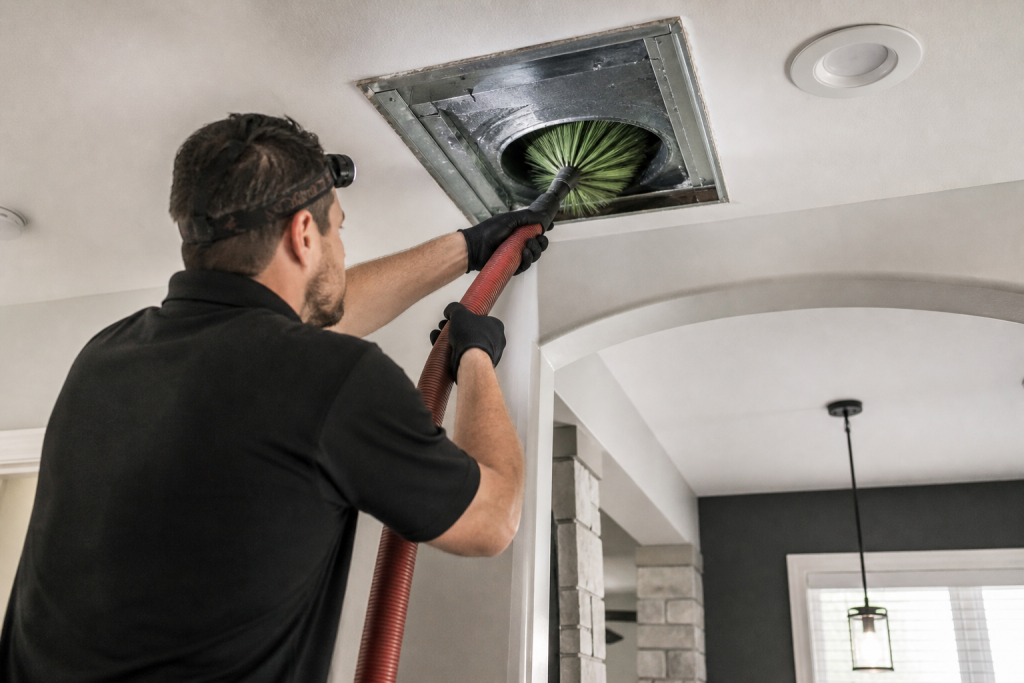
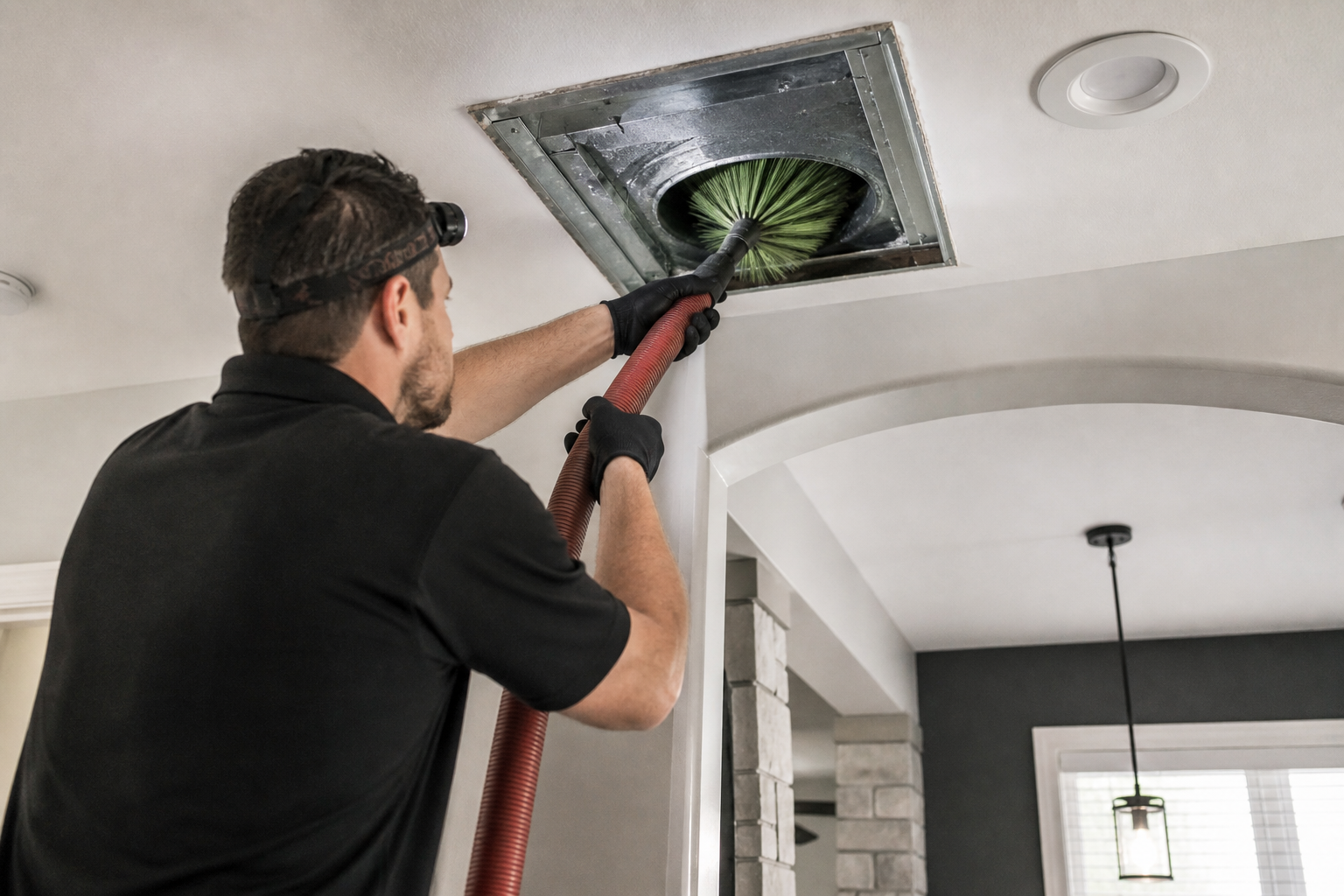
The key distinction: abatement equipment controls airborne hazards during disturbance. It doesn’t remove adhered debris from duct walls—that still requires mechanical agitation. In our work across Wichita neighborhoods from College Hill to Delano, we’ve found that fewer than 10% of residential duct systems genuinely need abatement-protocol cleaning. The other 90% need thorough mechanical cleaning with proper vacuum collection, which our Rotobrush and Nikro systems handle without the overhead of full containment.
When HEPA Containment Is Actually Necessary in Wichita Homes
Wichita’s climate creates specific duct contamination scenarios that can legitimately require abatement-grade protocol. Our hot, humid summers and hard freeze-thaw winters stress HVAC components in ways that generate actual hazards—not just dust.
Here are the verified conditions where we’ve deployed or recommended Abatement Technologies-level containment:
- Visible mold growth exceeding 10 square feet inside the air handler or main trunk lines, confirmed by laboratory analysis—not the “black streaks” near registers that are actually oxidation on galvanized metal.
- Asbestos-containing duct wrap or transite pipe in pre-1980 Wichita homes, particularly in Riverside, Midtown, and parts of South Wichita where we still encounter original HVAC installations.
- Lead dust infiltration following renovation or demolition work without proper isolation, common in historic district properties around Old Town and Douglas Design District.
- Post-fire smoke and soot damage where combustion particulate has penetrated the entire distribution system, requiring containment during aggressive mechanical cleaning.
- Biohazard contamination from rodent or bird infestations where droppings carry hantavirus or histoplasmosis risk—more common in rural-exurb properties toward Goddard and Andover than central Wichita, but we’ve handled several.
Here’s the critical point: each of these conditions requires pre-work testing and documentation. If a contractor proposes abatement-protocol cleaning based solely on a visual inspection or a “mold test” they performed themselves, that’s a red flag. In Kansas, mold assessment and mold remediation are legally separable activities for good reason.
Kansas Regulatory Overlap: When Duct Cleaning Crosses Into Remediation
Kansas does not license mold remediators at the state level, but the Kansas Department of Health and Environment (KDHE) maintains guidelines for asbestos and lead abatement that directly affect HVAC work. Here’s where Wichita homeowners get tripped up: a standard duct cleaning contractor can legally clean your ducts. They cannot legally disturb asbestos-containing materials, perform mold remediation, or conduct lead abatement without additional EPA or state certifications.
The regulatory lines that matter for your project:
- Asbestos: Any disturbance of asbestos-containing material in a residential building requires EPA notification, proper containment, and licensed abatement contractors. If your Wichita home was built before 1981 and has original duct wrap or rigid transite pipe, assume asbestos presence until tested.
- Lead: EPA RRP (Renovation, Repair, and Painting) certification is required for work disturbing lead-based paint in pre-1978 housing. This includes ductwork in walls or chases where painted surfaces are disrupted.
- Mold: While Kansas lacks specific mold licensing, legitimate remediation follows ANSI/IICRC S520 standards. A duct cleaner proposing “mold removal” without referencing this standard—or without independent pre- and post-testing—is operating outside recognized protocol.
We’ve been called to jobs in Maize and Haysville where a homeowner hired a “duct cleaning” company that began tearing out moldy flex duct without containment or proper disposal. That’s not cleaning—that’s unlicensed remediation with serious liability exposure for the homeowner. If your contractor can’t produce certificates specific to the hazard they’ve identified, stop the job.
Cost Reality: Standard Duct Cleaning vs. Abatement-Protocol Cleaning in Wichita
Pricing transparency matters because abatement-protocol work carries legitimate additional costs—but also legitimate potential for inflated billing. Based on our market knowledge and what we’ve seen from competitor proposals reviewed by Wichita homeowners who called us for second opinions:
| Service Scope | Typical Wichita Range | What’s Included |
|---|---|---|
| Standard residential duct cleaning (up to 15 vents) | $350–$650 | Mechanical agitation with contact-brush systems, negative-pressure vacuum collection, register/grille cleaning, basic system inspection |
| Abatement-protocol duct cleaning with HEPA containment | $1,800–$4,500+ | Pre-work air sampling, sealed containment enclosure, HEPA-scrubbed negative air, protective equipment for technicians, specialized waste disposal, third-party clearance testing, documentation package |
| Post-remediation clearance cleaning only | $800–$1,500 | HEPA vacuuming of accessible duct surfaces, air scrubber deployment during work, pre- and post-particulate counts, written clearance report |
The abatement price isn’t inflated if it includes all listed elements. Where we see abuse: contractors quoting $2,500+ for “HEPA cleaning” that consists of running a portable air scrubber in the basement while performing standard vacuum work upstairs. The scrubber itself doesn’t clean your ducts—it filters ambient air. Actual abatement-protocol cleaning requires sealing the HVAC system into a contained work zone, establishing negative pressure at every access point, and documenting particulate levels before, during, and after.
In our 17 years inside Wichita duct systems, we’ve recommended abatement-protocol work exactly twelve times. Each instance involved pre-existing testing from a certified industrial hygienist or KDHE-licensed asbestos inspector—not our own “assessment.”
Five Questions to Ask Before Authorizing Abatement-Level Duct Work
When a contractor proposes HEPA containment and abatement-grade pricing, treat it like any major home repair: verify before authorizing. Here’s our checklist, developed from jobs we’ve inherited after Wichita homeowners got burned:
- “What specific test confirmed the hazard, and who performed it?” Acceptable answers: independent industrial hygienist, certified mold inspector, KDHE-licensed asbestos inspector. Unacceptable: “I can see it,” “my moisture meter detected it,” or an in-house “test” with no lab certification.
- “Will you provide a written scope of work referencing ANSI/IICRC S520, EPA NESHAP, or KDHE asbestos guidelines?” Legitimate remediation-level work follows published standards. Vague references to “industry best practices” without citation indicate improvisation, not expertise.
- “Is third-party clearance testing included, and who conducts it?” The contractor who performed the work cannot objectively verify their own results. Post-work air sampling or surface testing must be by an independent party with no financial interest in the outcome.
- “What exactly does the containment enclosure cover—specific rooms, the entire system, or just the air handler?” Scope creep kills budgets. We’ve seen proposals where “whole-house containment” meant plastic sheeting over two basement vents while the rest of the system received standard cleaning at abatement prices.
- “If testing comes back below action levels, what’s the revised scope and price for standard cleaning?” Ethical contractors have this answer ready. The ones who stall or insist “we already mobilized” are committed to the sale, not the appropriate solution.
We keep this list on our own proposal tablet for Wichita customers who ask—because transparency shouldn’t be proprietary. Henry Wood, owner and lead technician, handles these conversations personally. If another company’s proposal doesn’t survive these five questions, we can usually tell you what standard cleaning would actually address in a ten-minute phone call.
When to Call a Pro in Wichita
If you’ve received a proposal mentioning Abatement Technologies, HEPA containment, or “remediation-grade” duct cleaning and you’re uncertain whether it’s warranted, that’s exactly when to get a second set of eyes on your system. In our experience across Wichita’s 67203 to 67226 zip codes, the majority of homeowners who call us about abatement-level quotes discover their actual need is thorough standard cleaning with proper equipment.
Related services in Wichita: For standard residential duct cleaning without contamination concerns, see our Atlas Air Duct & Vent Cleaning Kansas home page. We also provide Air Duct Cleaning in Kansas City, Dryer Vent Cleaning in Kansas City, and HVAC Cleaning in Kansas City for properties in that metro area.
The Bottom Line
Abatement Technologies equipment belongs in hazardous material containment, not routine residential maintenance. When it appears in your Wichita duct cleaning proposal, demand the documentation that justifies its use: independent testing, written scope referencing published standards, third-party clearance verification, and transparent pricing that separates containment costs from actual mechanical cleaning. The legitimate applications exist—mold, asbestos, lead, post-fire, biohazard—but they’re rare in typical residential HVAC systems.
At Atlas Air Duct & Vent Cleaning Kansas, we’ve built our reputation on matching the right equipment and protocol to the actual condition of your duct system. Henry Wood, owner and lead technician, personally evaluates every job we quote in Wichita. If your situation genuinely requires abatement-grade work, we’ll tell you—and we’ll tell you what documentation to demand from any contractor you choose. If it doesn’t, we’ll show you exactly what our Rotobrush and Nikro systems will remove, with pricing that reflects standard professional cleaning, not theatrical equipment deployment.
Call (855) 595-7944 for a free estimate. We’ll look at what you have, tell you what you actually need, and leave the decision where it belongs—with you.
Frequently Asked Questions
You need independent testing from a certified industrial hygienist or licensed inspector—not the contractor’s own assessment. In Wichita, legitimate abatement-level work follows confirmed findings of mold exceeding 10 square feet, asbestos-containing materials, lead dust, or biohazards. Without lab-certified documentation, assume standard professional cleaning is appropriate. Call (855) 595-7944 if you’re unsure—we’ll review any proposal you’ve received at no charge.
Standard duct cleaners can clean ducts. They cannot legally disturb asbestos without EPA notification and licensed abatement contractors, and Kansas has no state mold license—though legitimate mold remediation follows ANSI/IICRC S520 standards. If your contractor proposes hazard removal without showing specific certifications for that hazard, they’re operating outside regulatory bounds. Ask for credentials before any work begins.
A HEPA air scrubber filters ambient air in a contained space—it doesn’t contact or remove debris from duct walls. Actual duct cleaning requires mechanical agitation (like Rotobrush contact-cleaning systems) combined with negative-pressure vacuum collection (like Nikro equipment) to dislodge and extract adhered contaminants. We’ve seen Wichita homeowners charged abatement prices for running a scrubber in the basement while standard vacuuming occurred upstairs. The scrubber is containment; it’s not cleaning.
Always. Abatement-protocol pricing runs 3-4x standard cleaning, and the equipment looks impressive enough to discourage questioning. Get a second evaluation from a company with documented experience in both standard and remediation-level work—preferably one that can explain why your specific system does or doesn’t need containment. At Atlas, we’ve saved Wichita homeowners thousands by identifying when “mold” was actually oxidized metal or when “asbestos concern” was modern fiberglass wrap.
You should receive: the original independent test confirming the hazard; a written scope of work referencing applicable standards (S520, EPA NESHAP, etc.); photos of containment setup; waste disposal manifests for hazardous materials; and third-party post-work clearance testing with lab results. Any contractor performing legitimate abatement-level work generates this documentation as a matter of course. Absence of this paperwork suggests you paid for equipment theater, not actual protocol.
Written by Henry Wood, Owner & Lead Technician at Atlas Air Duct & Vent Cleaning Kansas, serving Wichita since 2009.
Need Air Duct Cleaning Help?
Call Atlas Air Duct & Vent Cleaning Kansas — licensed & insured, available 24/7 in Kansas.
(855) 595-7944