
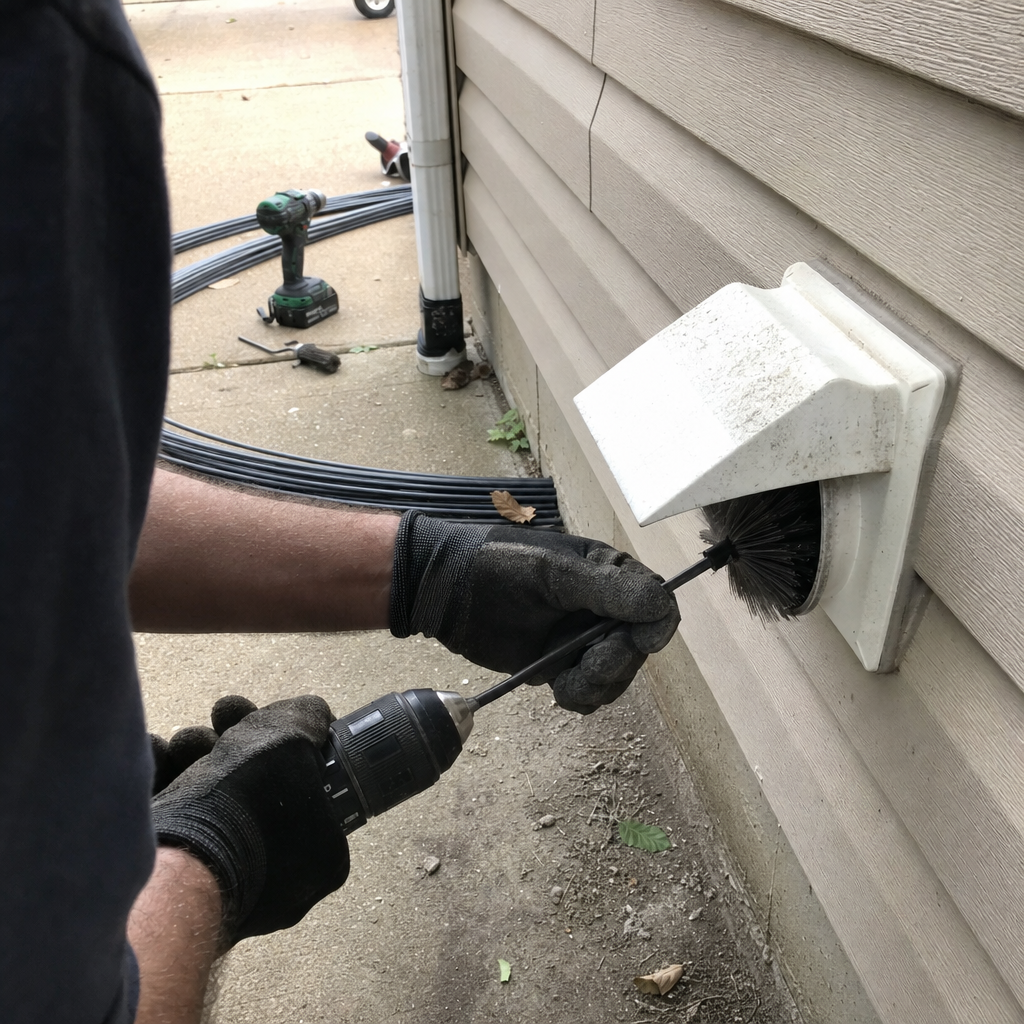
Trane Air Duct Cleaning in Topeka, KS | Atlas Air Duct & Vent Cleaning Kansas
Trane air duct cleaning in Topeka typically runs $280–$520 for a full system, depending on whether your home’s been through a Flint Hills burn season and how much prairie ash has settled in the returns. We’re independent Trane specialists — not manufacturer-authorized — and we cover all of Topeka’s core ZIP codes including 66621, 66622, 66624, and 66625. Henry Wood, owner and lead technician, handles the work personally with Rotobrush and Nikro equipment. Call (855) 595-7944 for a free estimate.
Why Topeka Residents Choose Us for Trane Service
Henry Wood grew up in Rosedale, Kansas City, Kansas, and after 17 years crawling through duct systems across the metro, he’s developed a particular eye for what Trane equipment does when it’s paired with Topeka’s housing stock and burn-season air. He picked up his HVAC fundamentals at Johnson County Community College, and the hands-on coursework steered him straight into residential air systems — the kind of work where you actually see what’s inside someone’s ducts rather than spec sheet theory.
When you call Atlas, Henry’s the one who shows up. Not a rotating crew member. Not a franchise dispatcher sending whoever’s available. Our 276 customers have reviewed us at 4.8 stars, and a recurring theme in those reviews is that Henry tells you exactly what he found — no upsell, no runaround. We’ve got professional-grade Rotobrush contact-cleaning systems and Nikro negative-pressure vacuums, plus Abatement Technologies equipment for particulate containment. That’s remediation-grade gear, not a shop-vac with a brush attachment.
We’re independent of Trane. That means we use OEM Trane motors, coils, and control boards when repairs are needed, but we’re not bound to factory service protocols that might miss how Topeka’s local conditions actually affect your system. From cleaning to repair to sanitizing — handled in one visit.
Common Trane Air Duct Cleaning Problems We Solve in Topeka
- XV20i variable-speed blower motor bearing failure. The fine prairie ash from Flint Hills prescribed burns is more abrasive than ordinary household dust. It slips through unfiltered return leaks and grinds against blower bearings. Topeka’s burn season peaks in March and April, and by May we’re seeing XV20i units throwing speed errors in 66605 and 66607. The motor doesn’t fail all at once — it hunts, it ramps unevenly, your airflow drops before you notice the noise.
- Coil fin corrosion on units near the Kansas River. North Topeka neighborhoods sit in a humidity pocket off the river corridor. Trane coil fins — especially on XR14 and XR17 units — trap moisture after spring smoke and humidity spikes. We’ve pulled coils in Oakland and North Topeka with fin deterioration that started as surface oxidation and progressed to airflow-blocking scale. A standard vacuum pass won’t touch it; these need chemical coil rinses.
- XL20i condensate drain clogs in post-war bungalows. Topeka’s core ZIP codes — 66603 through 66607 — are thick with 1940s-1970s homes that have oversized, poorly sealed return-air plenums instead of proper duct runs. Grass seed, dust, and prairie ash collect in these utility spaces, then wash into condensate drains during humid summer cycles. The XL20i heat pump’s drain pan overflows, and homeowners smell must before they see water.
- Static pressure issues from stamped-steel duct transitions. Original ductwork in Topeka’s older housing stock uses stamped-steel transitions that rust and loosen at the joints. Trane’s ECM motors compensate by ramping harder, which burns more electricity and shortens motor life. We seal these transitions during cleaning — it’s not a separate upsell, it’s part of doing the job right on this equipment in this city.
- Blower wheel blade wear from abrasive ash. The reddish-brown prairie ash that technicians pull from southeast Topeka ducts in April and May isn’t just dust. It’s silica-rich particulate from burned tallgrass prairie. On Trane units, this ash etches blower wheel blades, throwing them out of balance and creating vibration that transmits through the ductwork. Homeowners describe it as “the furnace sounds like it’s working harder.” It is.
Trane Service in Topeka: What Local Conditions Mean for Your Equipment
Every spring, ranchers in the Flint Hills conduct millions of acres of prescribed burns, sending dense smoke and fine ash particulates directly into Topeka. This annual burn season, concentrated in March and April, creates a uniquely heavy duct-contamination cycle for Topeka homes that simply does not exist at the same scale in Kansas City, Wichita, or any other nearby metro. The ash is reddish-brown, fine enough to pass through standard fiberglass filters, and more abrasive than ordinary household dust.
For Trane owners, this means blower wheel blades and coil fins take accelerated wear. We’ve opened XV20i units in 66605 where the blower wheel looked sandblasted. The ash also coats evaporator coils, reducing heat transfer efficiency before homeowners notice any airflow drop. A standard duct vacuuming — the kind of service that clears loose debris from main trunks — won’t remove adhered ash from coil surfaces. Our post-burn-season protocol includes a chemical coil rinse and contact-brush agitation on the blower assembly. If your Trane system’s been running through burn season without this level of cleaning, you’re likely operating at reduced capacity with increased motor strain.
Trane Models & Products We Service in Topeka
We work on the Trane split systems, air handlers, and heat pumps common in Topeka residential installations: the XV20i Variable Speed, XR17, XR14, and XL20i model lines. Our technicians receive ongoing Trane-specific training on installation quirks and service procedures for these units, which matters when you’re diagnosing duct systems paired with Trane equipment rather than generic HVAC.
We stock OEM Trane motors, coils, and control boards for repairs. Aftermarket parts often don’t meet Trane’s torque and airflow specs — we’ve seen replacement motors that run at wrong RPM curves and throw the same error codes the original failed with. For fast Topeka turnaround, we keep common XV20i and XR14 blower motors, plus XR17 coil assemblies, in our service inventory. If your Trane unit’s over 15 years old and needs major repairs like compressor or coil replacement, we’ll tell you straight: replace the unit. Duct cleaning on an inefficient system is wasted money.
Trane Service Pricing in Topeka
Trane air duct cleaning in Topeka breaks down as follows:
- Standard full-system duct cleaning: $280–$380
- With evaporator coil cleaning and chemical rinse: $380–$460
- With coil cleaning, duct sealing, and video inspection: $420–$520
Post-burn-season cleanings — April through June — typically land in the upper half of these ranges due to ash loading and the additional coil treatment required. Homes in north Topeka near the Kansas River corridor often need extra attention to moisture-affected components. Our free estimate includes a full video inspection of your duct system, so you see what we’re seeing before any work starts. No guesswork, no arrival upsells. Call (855) 595-7944 to schedule — estimates are free, and Henry Wood handles the assessment personally.
Serving Topeka, KS — Our Local Coverage Area
We’re based in the Topeka area and know this community well, and we also provide Trane service in Lawrence. Use the map below to see our service coverage — if you’re nearby, we can almost certainly help.
FAQs — Trane Air Duct Cleaning in Topeka
Yes. The fine prairie ash from Flint Hills burns passes through standard 1-inch fiberglass filters and coats blower wheels and coils within a single season. We’ve opened two-year-old XR17 units in Topeka with significant ash loading. The warranty doesn’t cover contamination-related wear. Call (855) 595-7944 for a free video inspection — we’ll show you exactly what’s inside.
No, ash contamination itself doesn’t void the warranty, but Trane won’t cover failures caused by neglected maintenance. If ash loading causes blower motor bearing failure or coil corrosion and you have no service records, warranty claims get complicated. We document every cleaning with before/after video for your records.
It likely is. The Kansas River corridor adds localized humidity that accelerates rust scale in stamped-steel ductwork common in 1950s-1970s Topeka homes. Rust flakes break loose and collect in returns, restricting airflow. Trane ECM motors compensate by working harder, increasing energy use. We inspect for rust damage during every cleaning and seal compromised transitions.
Every 2–3 years for standard conditions, but annually if your home’s in the burn-season path — generally southeast and east Topeka, plus any home with known return-air leaks. The abrasive ash accelerates wear beyond what Trane’s maintenance schedules anticipate for normal dust environments.
We do. Proper Trane duct cleaning requires opening the air handler cabinet to clean the blower wheel, evaporator coil, and condensate drain — these components are where Topeka’s ash and moisture cause the actual problems. Duct-only vacuuming without equipment access misses the contamination points that matter for Trane performance.
Service Areas Near Topeka
We run Trane service calls throughout the Topeka metro and into surrounding communities — Trane in Tonganoxie, Kansas City, Olathe, Lenexa, and Wichita are all within our regular service radius. Henry Wood lives in the Kansas City area and routes Topeka calls to minimize drive time, which means faster response for emergency ash-loading situations during burn season.
Book Your Trane Service in Topeka Today
Call (855) 595-7944 to speak with Henry Wood directly. Same-day appointments often available for post-burn-season urgent cleanings. Free estimates. Owner on every job.
Written by Henry Wood, Owner at Atlas Air Duct & Vent Cleaning Kansas, serving Topeka, Eudora Trane service, and the Kansas City metro since 2007.