
Fast, Reliable Dryer Vent Cleaning Across Kearney
Dryer vent cleaning in Kearney, MO typically costs $149–$289 for standard residential service, with most jobs completed in under 90 minutes and same-day scheduling available when you call before noon. Henry Wood, owner and lead technician at Atlas Air Duct & Vent Cleaning Kansas, handles every Kearney job personally — not a rotating crew member, not a franchise dispatcher. If your dryer’s taking two cycles, your lint trap’s clean, and you’re still waiting around, your vent line is the problem.
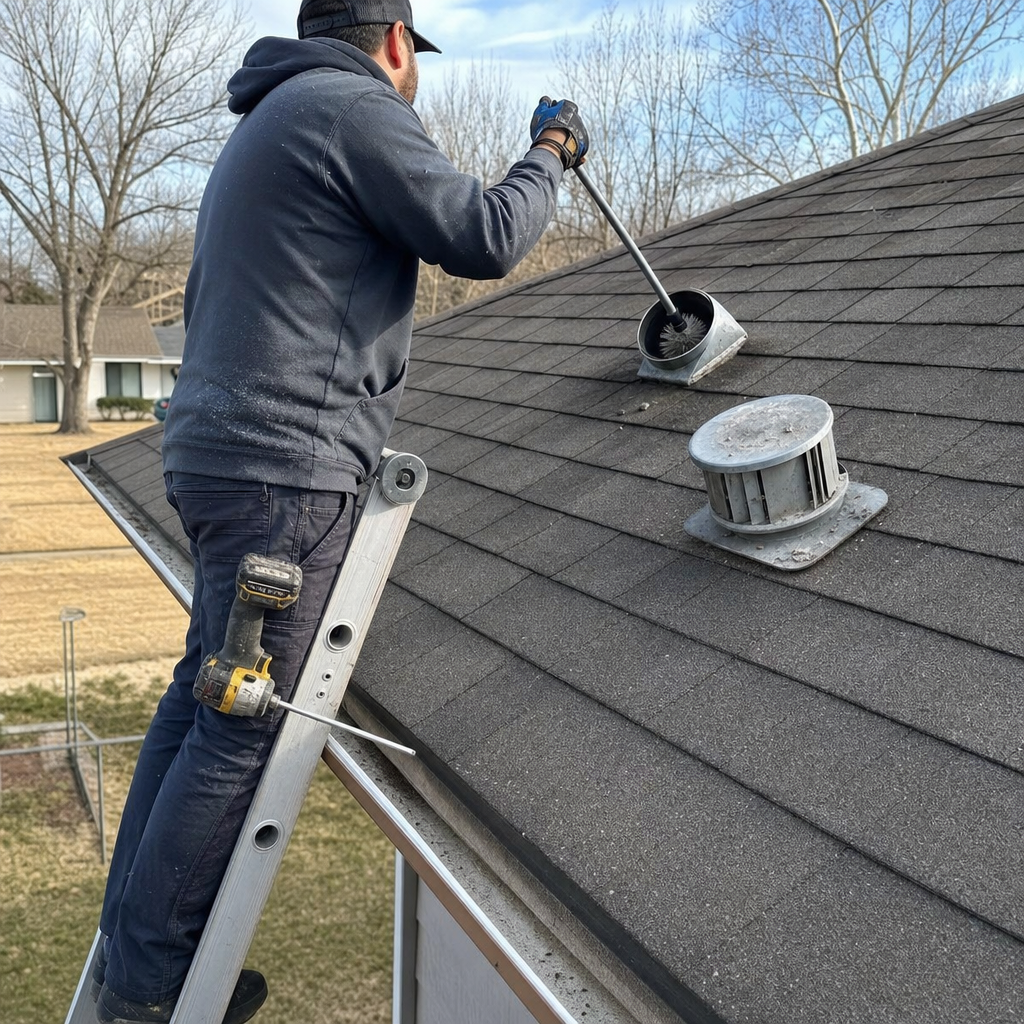
We make the run up from Wichita to Kearney regularly, and we know the territory — from the newer subdivisions clustered along US-69 to the older farmsteads out on MO-92. Kearney’s growth from a quiet Clay County town to a busy Kansas City exurb has left a split housing stock that creates two completely different sets of dryer vent problems. Our Dryer Vent Cleaning team sees both: the builder-grade flex duct stuffed with construction debris in 2015-built homes, and the original rigid metal runs through unheated crawlspaces in 1970s ranches that nobody’s touched in forty years. Call (855) 595-7944 and we’ll get you on the schedule.
Why Atlas Air Duct & Vent Cleaning Kansas Is Kearney’s Preferred Dryer Vent Cleaning Company
Henry Wood has spent 17 years inside duct systems, and he still climbs every ladder and feeds every brush on Kearney jobs. That’s not marketing — it’s how the business runs. When you book with Atlas, the person with the most experience in the company is the one who shows up at your door in the 64060 zip code.
Our 276 verified reviews average 4.8 stars, and Kearney customers specifically mention the difference it makes having an owner-operator who can spot problems a franchise crew would miss. One recent Kearney review noted Henry caught a disconnected vent behind their dryer that three previous “cleaning specials” had never even looked at.
Response time to Kearney runs same-day or next-day depending on call volume, because we’re not juggling a dozen crews across a metro franchise territory. We know the local roads — whether you’re off South Jefferson Street, out near Jesse James Park, or in the newer builds north of I-35 — and we don’t waste your morning with a four-hour arrival window.
Local knowledge matters here. Kearney sits at the hard edge where Clay County’s active agricultural land meets fast-growing residential subdivisions, meaning dryer vents in many homes draw in a sustained mix of field dust, crop particulate, and silage debris — especially during fall harvest and spring tilling — that suburban HVAC systems closer to Kansas City proper simply don’t face at the same volume. This farm-dust infiltration loads filters and vent interiors far faster than typical suburban schedules account for, making annual cleaning a legitimate necessity rather than an upsell.
Our Dryer Vent Cleaning Services in Kearney
Dryer Vent Inspection
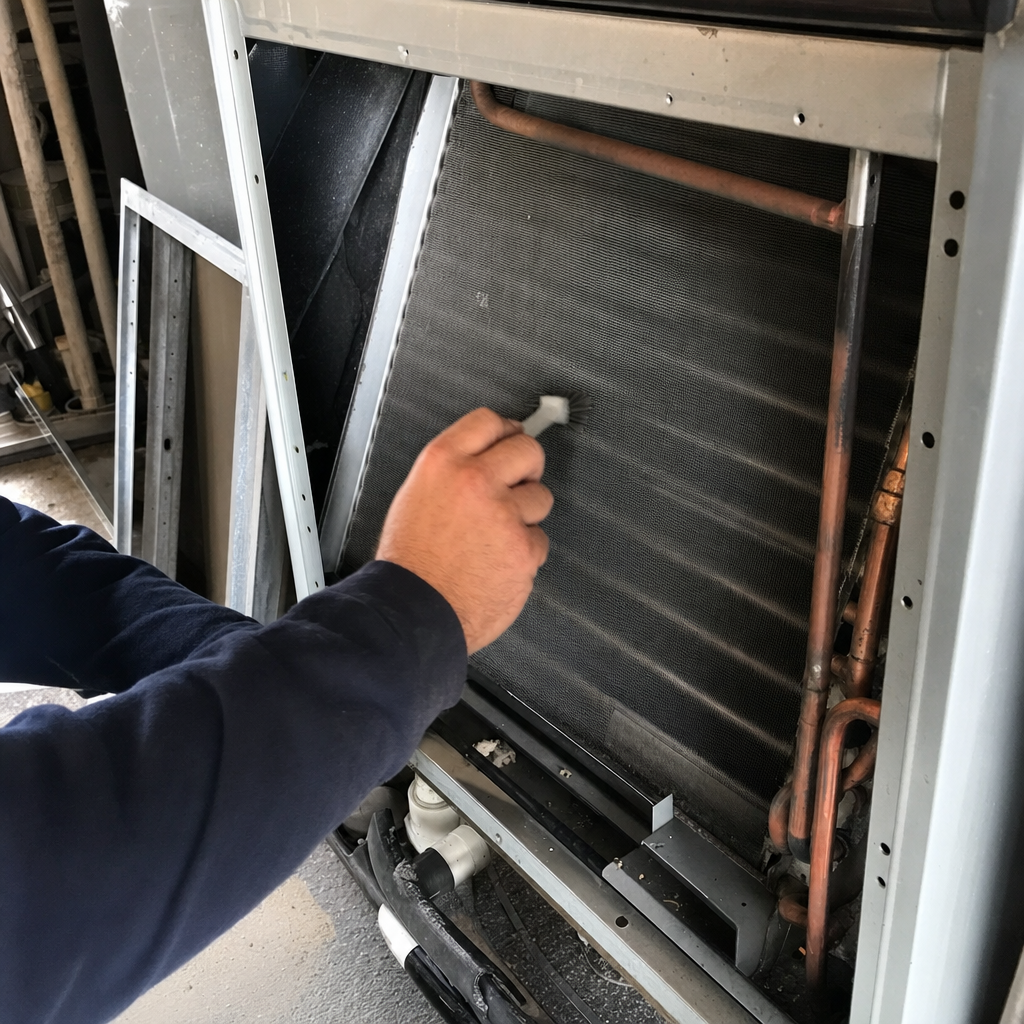
Every Kearney job starts with a full inspection using our professional-grade equipment — not a flashlight and a guess. Henry Wood checks airflow velocity at the exterior cap, examines the full run with a borescope camera when access allows, and identifies the specific failure mode before any cleaning begins. In Kearney’s newer subdivisions, we’re often finding construction debris — drywall dust, insulation fragments, sawdust — still packed into boot connections of homes built as recently as 2015, because rapid development timelines meant duct systems were never post-construction cleaned before buyers moved in. In the older farmhouses along MO-92, we’re looking for condensation damage, crushed flex, and bird guard blockages that require a completely different approach.
Vent Cleaning & Lint Removal
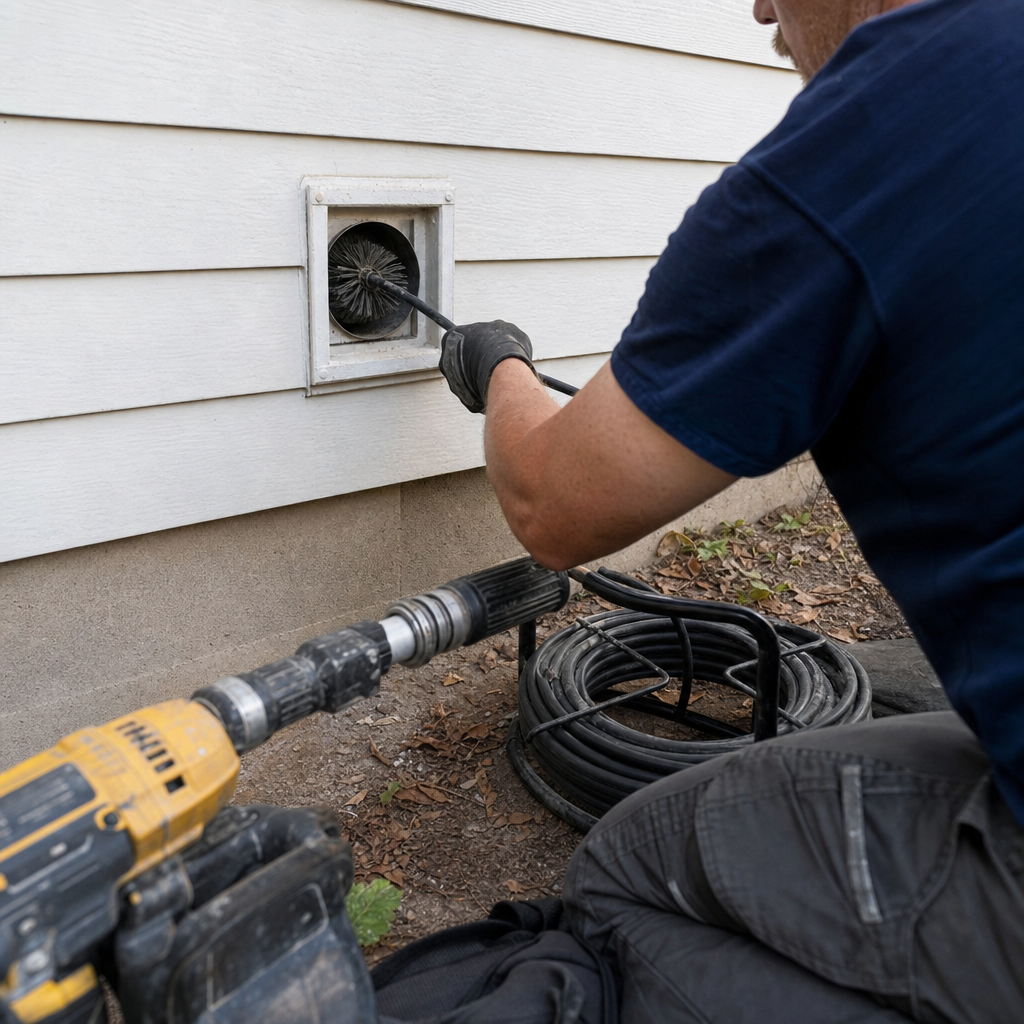
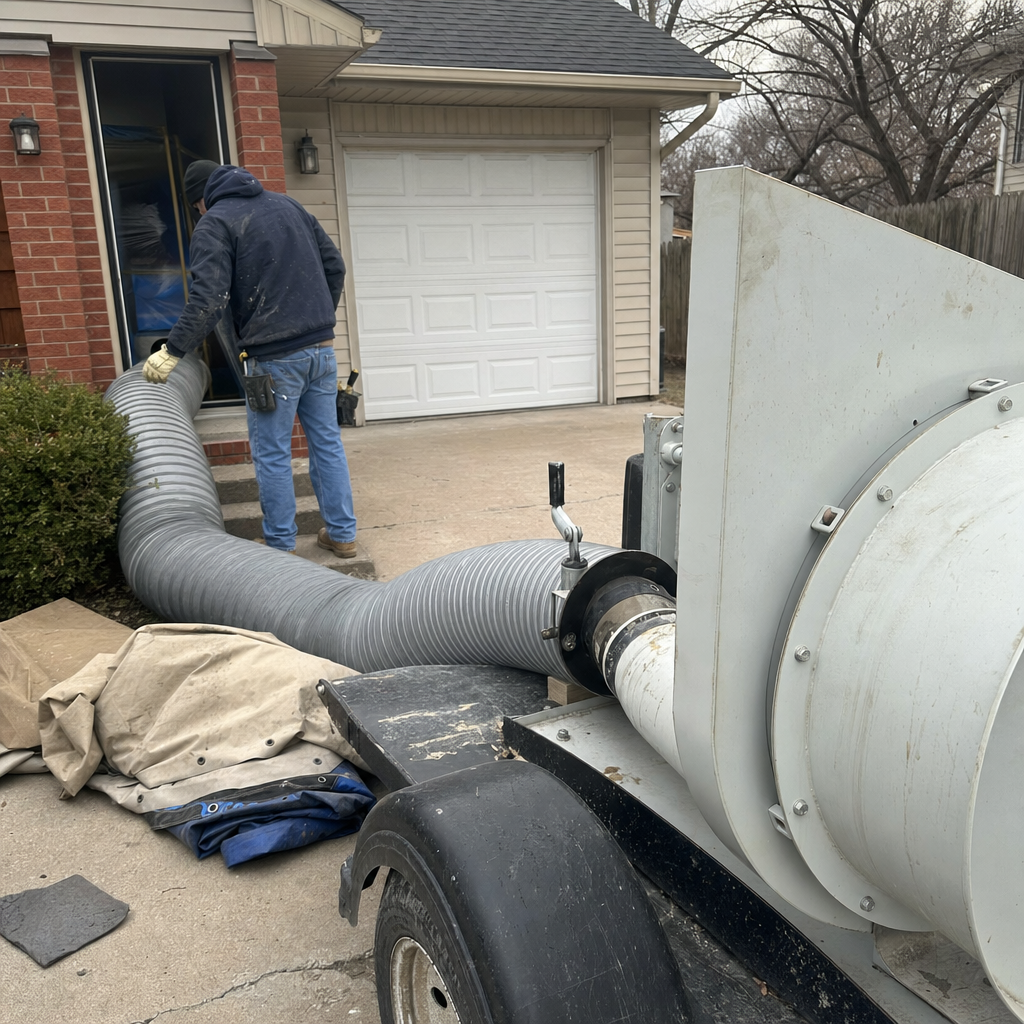
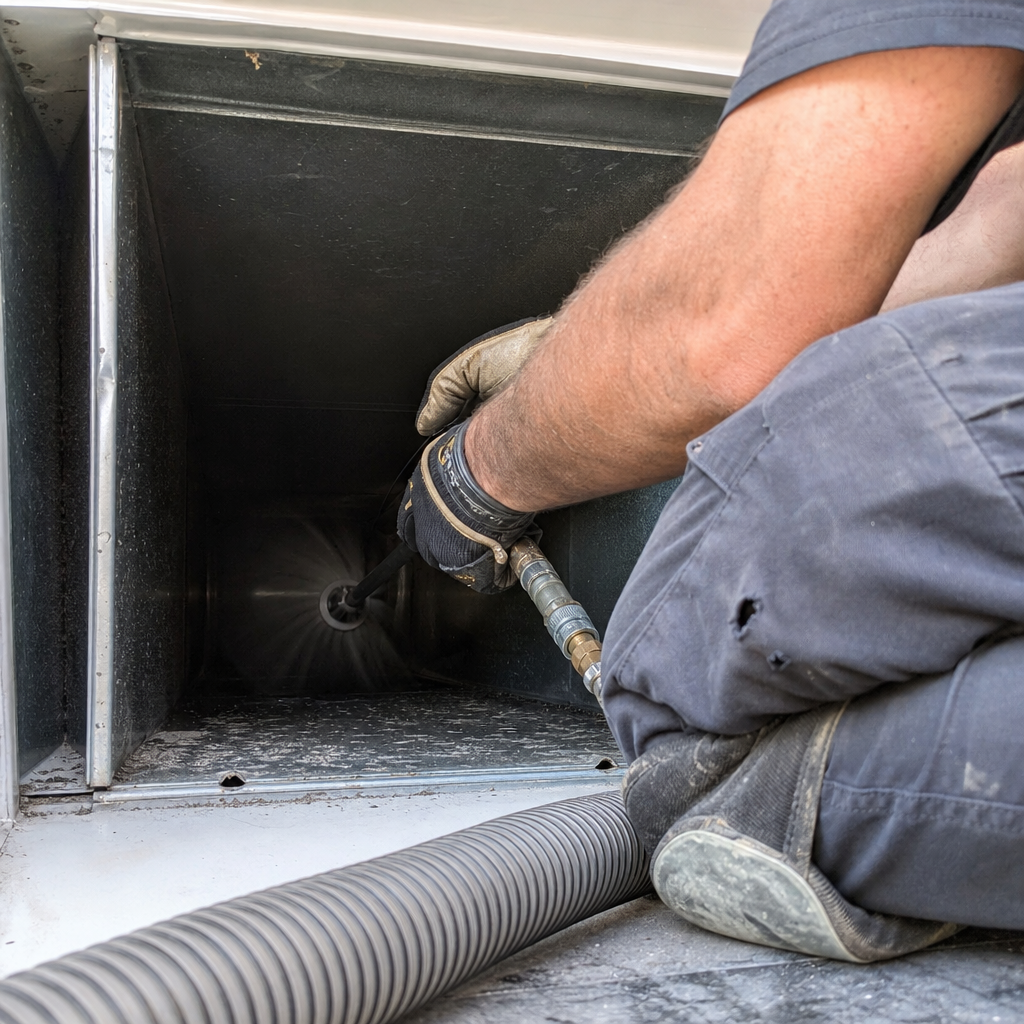
We clean with Nikro negative-pressure vacuums and Rotobrush contact-cleaning systems — the same equipment restoration contractors use after fire and water damage, not the residential shop-vac setups you see on coupon offers. For Kearney homes, this matters. The combination of high seasonal pollen from surrounding row crops, wind-driven soil particulate that peaks in dry spring and fall conditions, and near-year-round HVAC runtime means lint buildup here is denser and more biologically active than in protected urban environments. Our process removes the packed lint, restores designed airflow, and we verify the result with a post-cleaning airflow measurement. You’ll know it worked before we pack up.
Vent Rerouting
This is where Kearney’s split housing stock really shows. The bulk of Kearney’s housing stock is relatively new construction — subdivisions built in the 2000s through the 2020s — meaning builder-grade flexible ductwork and basic air handlers dominate. But a smaller layer of older farmhouses and ranch-style homes from the 1960s–1980s exists on larger lots, often with original rigid duct systems that haven’t seen a brush since installation. We reroute vents that were poorly designed from the start: runs that are too long, have too many bends, or terminate in crawlspaces where condensation destroys airflow. We recently cleared a bird guard and removed a lint dam from a 1977 ranch-style home on South Jefferson Street; the original 4-inch flexible aluminum vent had been pinched by a retrofitted gas line, reducing airflow to nearly zero and causing the dryer’s thermal overload to trip mid-cycle. Rerouting that vent to a shorter, straighter path solved the problem permanently.
Bird Guard Installation & Vent Cap Replacement
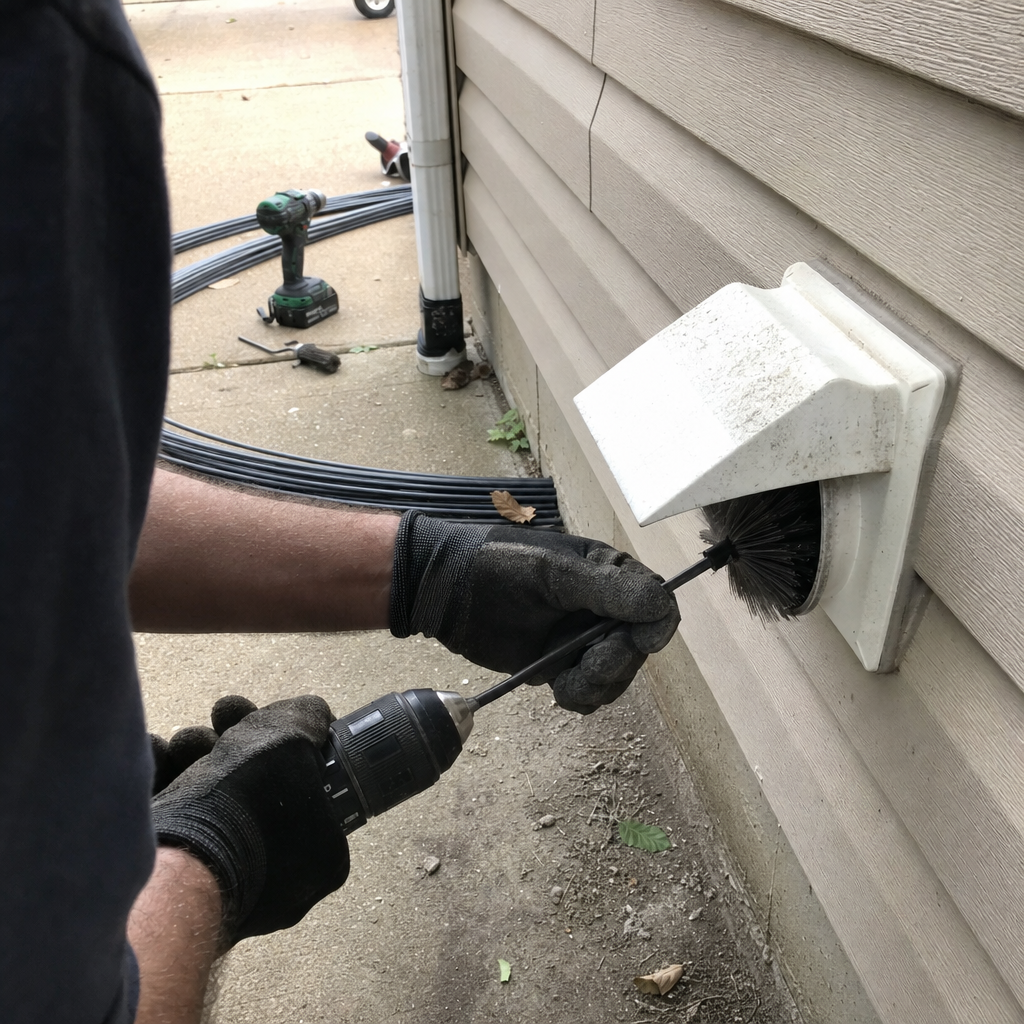
Kearney’s open-plain location and mix of mature trees and agricultural fields make bird and rodent intrusion a real issue. We install proper bird guards that don’t create the lint-plug problems cheap hardware-store versions cause, and we replace deteriorated vent caps that let in rain, snow, and pests. In Kearney’s older farmhouses with low-slope asphalt-shingle roofs, we regularly see nest-backed lint plugs in poorly designed bird guards — a failure mode that chokes airflow and creates genuine fire risk. Our replacement caps are designed for our climate: they seal when not in use, open fully under dryer pressure, and include screens that stop birds without trapping lint.
What happens when you call
- 1
A real person answersNo phone trees — you reach a local pro.
- 2
You get an upfront price rangeHonest numbers before anyone is dispatched.
- 3
A background-checked tech heads outLicensed & insured, dispatched right away.
- 4
You approve before work beginsNothing starts until you say go.
Trusted Brands We Service in Kearney
We work on every major dryer brand found in Kearney homes — Whirlpool, Maytag, LG, Samsung, GE, Bosch — and we stock common vent fittings and replacement caps so most jobs finish in one visit without waiting on parts. For HVAC-integrated systems and whole-house ventilation, we specify Honeywell and Aprilaire components when replacements are needed. Our equipment fleet includes Rotobrush contact-cleaning systems, Nikro negative-pressure vacuums, and Abatement Technologies particulate containment gear — remediation-grade capability that matches the equipment to the actual conditions we find in Kearney’s farm-dust environment, not a one-size-fits-all residential vacuum job.
Common Dryer Vent Cleaning Problems We See in Kearney Homes
- Nest-backed lint plugs in bird guards on low-slope vent caps. Common in older farmhouses with asphalt-shingle roofs around Kearney, these blockages combine biological debris with packed lint to create near-total airflow obstruction. The dryer runs hotter, cycles longer, and the thermal fuse becomes a fire hazard waiting to fail.
- Disconnected or crushed flex duct behind dryers in 2000s-era subdivisions. Builders along the US-69 corridor often left sharp bends and kinks in flexible duct that trap lint at the first elbow. Homeowners never see it because the dryer sits against the wall, hiding a problem that worsens every load.
- Standing water in vent runs through unheated crawlspaces in pre-1980s homes. In Kearney’s older farmhouses, especially those with stone foundations along MO-92, temperature swings cause interior condensation that bonds lint into rock-hard blockages — a failure mode virtually unknown in newer subdivisions. Standard brushing won’t touch it; we use specialized tools and sometimes need to replace the affected section entirely.
- Construction debris in newer homes that were never post-build cleaned. Technicians working the subdivisions off US-69 regularly find drywall dust, insulation fragments, and sawdust still packed into boot registers of homes built as recently as 2015. The dryer works, barely, but airflow is compromised from day one of occupancy.
Pricing for Dryer Vent Cleaning in Kearney, MO
Here’s what dryer vent cleaning costs in Kearney’s market:
- Standard residential vent cleaning (single-family, accessible exterior cap): $149–$189
- Deep cleaning with construction debris removal or heavy lint compaction: $190–$249
- Vent rerouting (new path, materials, labor): $275–$450 depending on length and access
- Bird guard installation or vent cap replacement: $85–$165 including parts
- Crawlspace access or extensive debris removal in pre-1980s farmhouses: $250–$289
What moves you up or down within these ranges: length of vent run, number of bends, accessibility (crawlspace vs. basement vs. first-floor wall), and whether we find damage requiring repair or replacement. We quote upfront after inspection, not after we’ve started. Estimates are free — call (855) 595-7944 and we’ll give you a firm number before you commit.
We Also Serve Cities Near Kearney
Henry Wood and our equipment make regular runs throughout Clay County and north Kansas City. If you’re in Excelsior Springs dealing with hard-water scale in your vent fittings, Liberty with its mix of historic and new construction, Smithville near the lake with seasonal humidity issues, or Gladstone with compact urban lot layouts, we cover those markets too. Same owner-operator, same equipment, same direct scheduling.
Serving Kearney, MO — Our Local Coverage Area
We’re based in the Kearney area and know this community well. Use the map below to see our service coverage — if you’re nearby, we can almost certainly help.
FAQs — Dryer Vent Cleaning in Kearney
Spring in Kearney brings peak pollen from surrounding row crops and pasture grasses, plus wind-driven soil particulate that loads your dryer’s lint trap and vent line simultaneously with organic debris. The vent — already narrowed by normal lint accumulation — can’t move enough air to evacuate moisture in one cycle. Call (855) 595-7944 for an airflow test; we’ll tell you in ten minutes if it’s a vent problem or a dryer problem, and estimates are free.
Yes — especially in Kearney’s rapid-growth subdivisions, where builder-grade flexible ductwork was often never cleaned after construction dust settled. We’ve found drywall dust, insulation fragments, and sawdust packed into boot registers of homes built as recently as 2015. Your dryer “works,” but it’s working against restricted airflow that wastes energy and wears components. A cleaning now establishes a proper baseline and protects your dryer warranty, which typically requires maintained venting.
It’s common for Kearney’s pre-1980s farmhouses, but it’s not ideal. In Kearney’s older farmhouses along MO-92, dryer vent runs often exit through uninsulated crawlspaces or stone foundations, where temperature swings cause interior condensation that bonds lint into rock-hard blockages — a failure mode virtually unknown in newer subdivisions. That 15-foot run is also longer than the 25 feet maximum (minus 5 feet per 90-degree bend) most dryer manufacturers recommend. We can inspect for condensation damage and quote a reroute to a shorter, above-grade path if your layout allows.
Check your exterior vent cap while the dryer is running on high heat. You should feel strong, warm airflow. If it’s weak, intermittent, or you see lint accumulation on the guard screen, the guard is either clogged or poorly designed. In Kearney, we regularly replace cheap hardware-store bird guards that trap lint with proper models that exclude birds without choking airflow. Call (855) 595-7944 and we’ll diagnose it in person — estimates are free.
No — and we’d tell you that even if it cost us a sale. The rigid metal duct in your older Kearney farmhouse is actually superior to builder-grade flexible duct; it has smoother interior walls that resist lint accumulation and maintains consistent diameter through the full run. What your old metal vent may need is proper cleaning, sealing at joints, and possibly a reroute if it’s been damaged by condensation or retrofitted utilities. We only replace rigid metal with flexible duct when access absolutely demands it, and we use higher-grade semi-rigid products, not the thin foil flex found in big-box stores.
Written by Henry Wood, Owner at Atlas Air Duct & Vent Cleaning Kansas, serving Kearney and the greater Kansas City area since 2008.