
Duct Sealing Cost in Kansas, KS: What You’ll Actually Pay Based on What’s Leaking
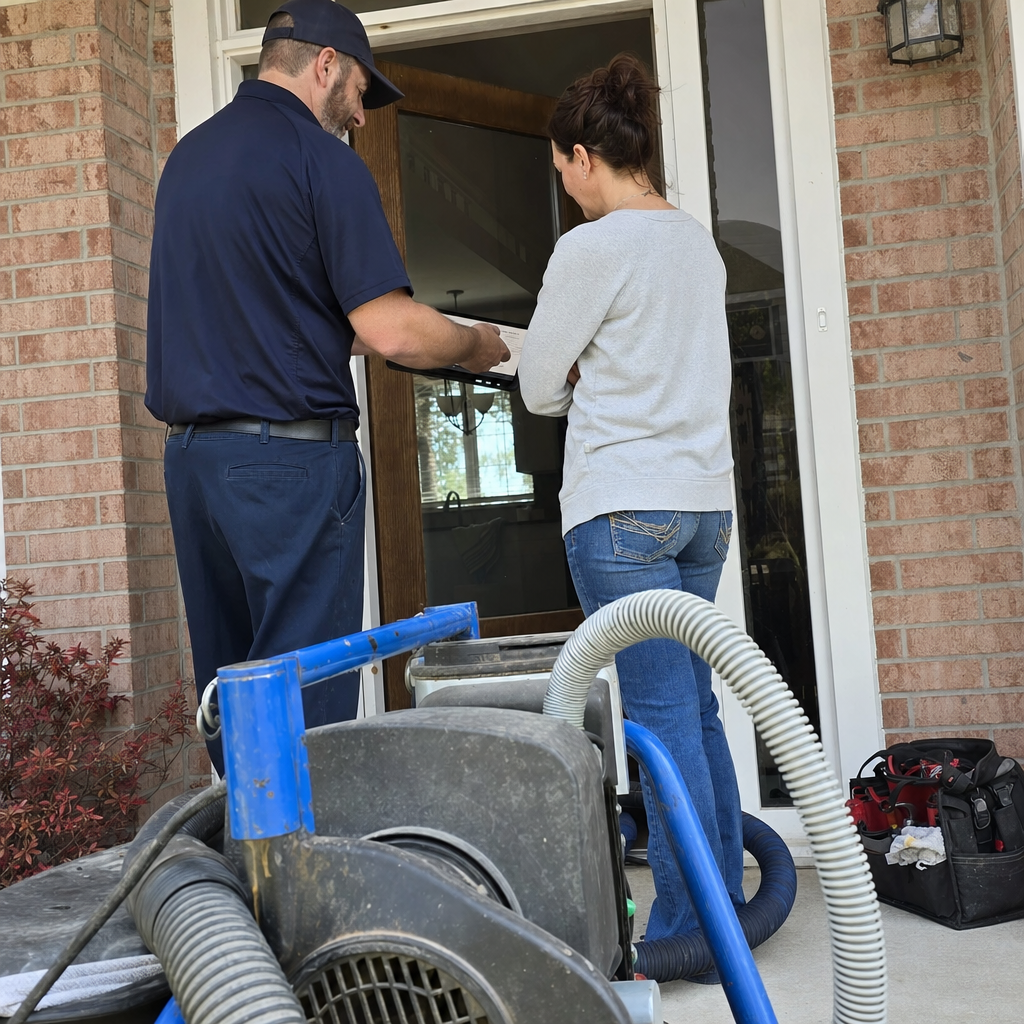
Professional duct sealing in Kansas typically runs $800–$2,400 for whole-system work, with spot repairs on accessible joints starting around $180–$450. The exact figure depends on whether we’re chasing a few loose connections with mastic or pressurizing your entire system with Aeroseal to find leaks hidden inside wall cavities. Call (855) 595-7944 for a free inspection and exact quote — Henry Wood, our owner and lead technician, will be the one crawling through your attic to find the real problem.
Why Most Duct Sealing Quotes Are Just Guesses
Here’s what I’ve learned after 17 years inside duct systems across Kansas City: the leaks that cost you money aren’t the ones you can see from the basement. They’re the gaps at collar connections behind drywall, the separated flex duct runs above your insulation, and the return plenum pulling 130-degree attic air into your system every July afternoon.
Last month we were in a Rosedale bungalow near 47th and Mission — beautiful old place, original hardwood, owner had already had two “duct inspections” that found nothing wrong. We pressurized the system with our Nikro negative-pressure rig and found 34% total leakage. The supply trunk had a six-inch gap where it entered the wall cavity, dumping conditioned air into the stud bay. No visual inspection catches that. The homeowner had been cooling the inside of her walls for three summers.
That’s why we don’t quote sealing over the phone. We need to either run a duct blaster test or get our Rotobrush camera and pressure gear into the system during a cleaning inspection. Anything else is selling you a solution before we know the problem.
The Two Leak Types Kansas Homeowners Need to Understand
Not all duct leaks hurt you the same way. Knowing the difference changes what you pay and what you get back.
- Supply-side leakage: Conditioned air escapes into unconditioned spaces — attics, crawl spaces, wall cavities. You’re paying to heat or cool air that never reaches your rooms. In Kansas, where summer attic temperatures hit 140°F and winter crawl spaces drop below freezing, this loss is brutal on your energy bills. We see this constantly in Wyandotte County’s older housing stock, where galvanized ductwork from the 1950s–70s has worked loose at every connection.
- Return-side infiltration: Your return ducts operate under negative pressure, sucking in whatever air surrounds them. When that return plenum runs through a vented crawl space or a dusty attic, you’re breathing that air — fiberglass, rodent droppings, insulation particles, last year’s pollen. This doesn’t show up on your energy bill the same way, but it shows up in allergy symptoms, dust buildup, and that “musty” feeling when the system kicks on.
Most Kansas homes have both. The ratio determines whether sealing pays for itself in six months or six years — and whether you need mastic work, Aeroseal, or both.
What Kansas Climate and Housing Stock Does to Your Ducts
Kansas City sits right on the edge of two climate zones, and our weather doesn’t negotiate. We swing from sub-zero wind chills to triple-digit heat index, with humidity that’ll swell a wooden doorframe shut. That expansion and contraction cycles your ductwork constantly — metal ducts fatigue at seams, flex duct pulls off collars, mastic from a 1990s job cracks and falls away.
The local building patterns make it worse. In neighborhoods like Rosedale, Argentine, and Turner, you’ll find:
- Post-war bungalows with ducts retrofitted into unconditioned crawl spaces that flood every spring
- 1970s–80s split-levels with return chases built into exterior walls — essentially framed-in channels that pull attic air through every seam
- Newer suburban builds in Piper and Edwardsville where cost-optimized flex duct runs snake through vented attics with minimal support, sagging and kinking within five years
We’ve measured return-side temperatures in July that were 18 degrees hotter than ambient indoor air — meaning the system was fighting 95°F return air before it even started cooling. Sealing those returns doesn’t just save money; it stops your system from inhaling your attic.
Henry Wood grew up in the Rosedale neighborhood of Kansas City, Kansas, and has never had much interest in leaving — the community is in his bones. He picked up his HVAC fundamentals at Johnson County Community College, where hands-on coursework pointed him straight toward residential air systems rather than new construction. For the past 17 years he has been crawling into duct systems across the metro, and locals know him as the guy who tells you exactly what he found in there — no upsell, no runaround. He started Atlas because his own family struggled with allergy issues and he was tired of contractors who treated indoor air quality like an afterthought. When he’s not on a job, you’ll find him most Saturday mornings at the Rosedale Barbecue counter with a cup of coffee.
Mastic vs. Aeroseal: When Each Method Actually Makes Sense
Two legitimate sealing methods, two very different applications and price points. Most pages mention both and move on. Here’s how we decide which one your system needs.
Mastic Sealant: The Hands-On Approach
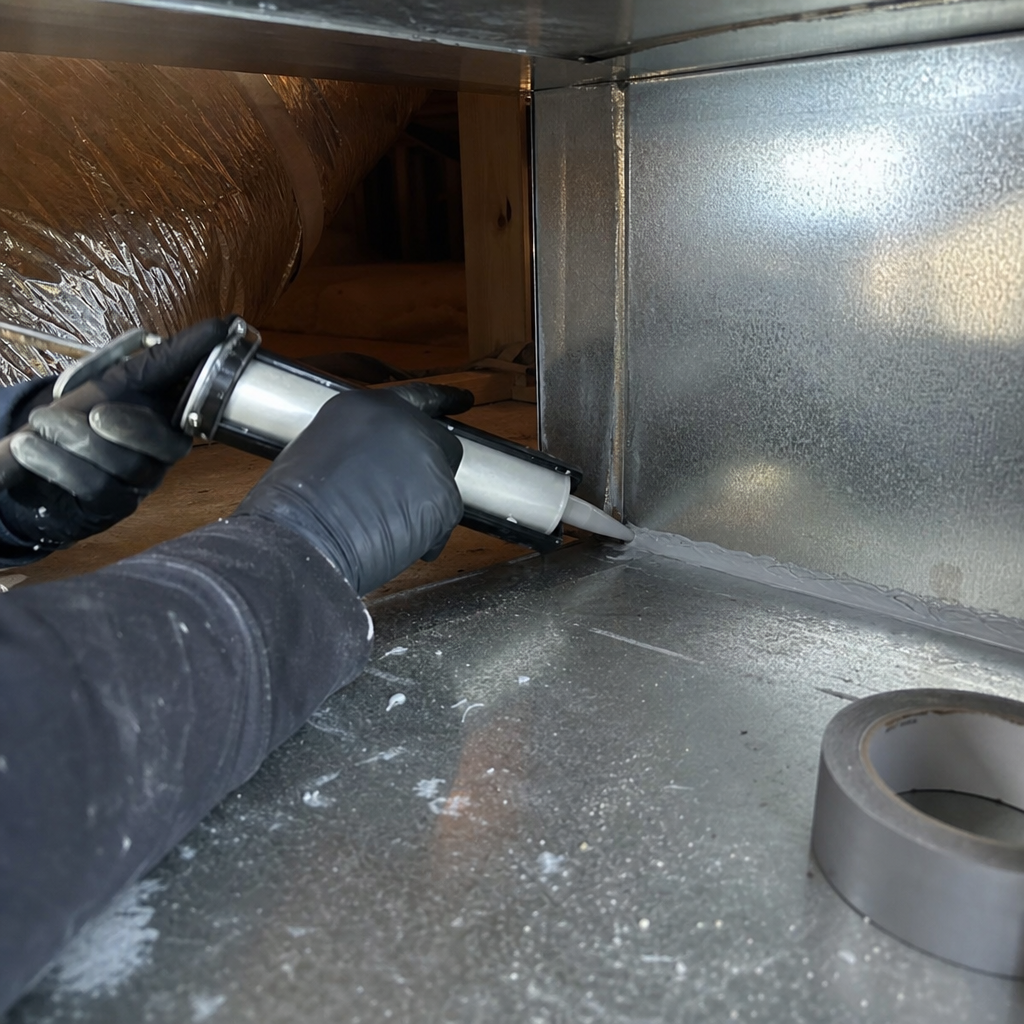
Mastic is a thick, fiber-reinforced paste we brush or trowel onto accessible joints, seams, and connections. It hardens into a permanent, flexible seal. This is the right call when:
- We can physically reach the leak — basement trunk lines, exposed crawl space runs, accessible attic connections
- The leakage is concentrated at a few known points — a disconnected collar, a failed tape joint, a rusted seam
- The ductwork itself is sound — no deterioration, no large holes, no crushed flex
Mastic work is labor-intensive and requires someone willing to squeeze into uncomfortable spaces. Henry handles this personally — it’s not a task we delegate. We use professional-grade mastic rated for temperature cycling, not the hardware-store caulk some crews try to pass off.
Aeroseal: The Whole-System Solution
Aeroseal is a pressurized polymer sealant that finds and seals leaks from the inside. We block your registers, pressurize the duct system, and atomized sealant particles bind at leak points — essentially patching from the interior surface outward. This is the right call when:
- Leakage is distributed throughout the system, especially in wall cavities we can’t access
- Previous testing shows 20%+ total leakage with no single obvious source
- You’ve had energy audits or high utility bills with no visible duct problems
Aeroseal requires specialized equipment and proper containment — we use Abatement Technologies particulate control systems during the process, not because it’s required but because we’ve seen what happens when sealant overspray gets into living space. The process takes 4–6 hours and requires temporary evacuation of the home.
Duct Sealing Cost Breakdown for Kansas Homes
These are real ranges from jobs we’ve completed across Kansas City, Kansas and the surrounding metro. For a detailed breakdown, see our 2026 price guide on duct repair and sealing costs in Kansas, KS. Your exact quote depends on system size, accessibility, and whether we find deterioration that needs repair before sealing makes sense.
| Service | Typical Range | What Drives Cost |
|---|---|---|
| Spot mastic sealing (1–3 accessible joints) | $180 – $450 | Labor time, crawl space/attic access difficulty |
| Partial system mastic (basement + accessible trunk) | $550 – $1,100 | Linear feet of duct, number of connections |
| Aeroseal whole-system sealing | $1,500 – $2,400 | System square footage, pre-seal leakage percentage, register count |
| Duct repair + sealing combo (deteriorated flex, disconnected trunk) | $900 – $2,800 | Extent of repair needed before sealing is viable |
| Post-seal verification test | $150 – $250 | Usually included in Aeroseal; separate for mastic-only jobs |
We’ve done $220 mastic jobs in Argentine basements where one trunk connection had worked loose. We’ve done $2,200 Aeroseal jobs in Piper where the entire flex duct network was leaking at every collar. The inspection tells us which you are.
When Sealing Is the Wrong Solution Entirely
This is where the owner-operator model matters. Henry’s been in enough duct systems around here to know what clean looks like — and most of what I open up isn’t it. More importantly, he knows when sealing would be a waste of your money.
We find these problems regularly during cleaning inspections, and addressing them during the same visit saves you a second trip charge:
- Severely deteriorated flex duct: The plastic liner has degraded, the insulation is water-stained and collapsing, or the wire helix is rusted through. Sealing leaks in duct that’s falling apart is patching a tire with dry rot. Replacement runs $400–$900 per run depending on length and access.
- Disconnected trunk sections: We see this in older Kansas homes where vibration and thermal cycling have pulled main trunk lines apart at seams. Mastic won’t bridge a half-inch gap; the section needs reconnection and proper support.
- Ducts with large mechanical damage: Crushed runs from storage in attics, rodent-chewed flex, or holes from previous contractor damage. These need repair or replacement, not sealant.
- Undersized returns: Common in 1960s–70s builds where original systems were never designed for modern airflow requirements. Sealing a return that’s already too small just makes the pressure problem worse.
Our full-scope model means we find this during a Duct Repair & Sealing inspection or cleaning visit, explain exactly what we’re seeing with camera footage, and handle repair and sealing in one trip. No scheduling a second contractor, no conflicting diagnoses.
Why Our Cleaning Inspection Often Reveals Sealing Needs
The best time to assess your ducts for leakage is when they’re already being cleaned. We’re inside the system with Rotobrush contact-cleaning heads and camera gear, pressurizing lines with Nikro vacuum systems, and we can feel where airflow drops off unexpectedly or hear where the vacuum pulls attic air through a return leak.
About one in three cleaning jobs in Kansas reveals significant leakage we didn’t know about going in. The customer called for dust and allergies; we found they were also paying to condition their crawl space. Because our service menu covers home air quality from cleaning through repair to sanitizing, we can address it same-day rather than sending you back to Google to find a second company.
Our equipment list matters here: Rotobrush for contact cleaning inside the duct, Nikro for negative-pressure containment, Honeywell and Aprilaire media for filtration assessment, Abatement Technologies for particulate control during any repair work. This isn’t a shop vac and a brush — it’s the same gear restoration contractors use after fire and water damage, because your air system deserves that level of control.
What Return on Sealing Looks Like in Kansas
Energy savings from duct sealing vary wildly depending on where your ducts live. Nationally, the Department of Energy estimates 20–30% of conditioned air is lost to leaks. In Kansas, with our extreme temperature swings and high percentage of attic/crawl space duct runs, we regularly measure losses above that range.
A typical 2,000-square-foot Kansas home with 25% duct leakage and $200 monthly HVAC costs can see:
- 15–25% reduction in heating/cooling energy use after proper sealing
- Payback period of 2–4 years for whole-system Aeroseal, faster for mastic-only work
- Improved comfort in problem rooms that never seemed to get enough airflow
- Reduced dust and allergen circulation, especially when return-side infiltration is sealed
The ROI is highest in homes with ducts in vented attics or crawl spaces — which describes most of the housing stock in Kansas City, Kansas built before 2000, and a surprising number of newer homes where builders prioritized cost over efficiency.
FAQs
Expect affordable duct repair and sealing in Kansas, KS to run $800–$2,400 for professional whole-system work, with accessible spot repairs at $180–$450. The exact cost depends on whether your leaks are reachable by hand with mastic or require Aeroseal pressurization to find and fix leaks inside wall cavities. Call (855) 595-7944 for a free inspection and written estimate — we don’t quote sealing without testing first.
Spot repairs and sealing are cheaper when the ductwork itself is sound — typically $180–$1,100 for mastic work on accessible leaks. Replacement becomes the better investment when flex duct is deteriorated, metal trunk lines are rusted through, or multiple runs are crushed or disconnected. During our inspection, we’ll show you camera footage of what we found and explain why sealing, repair, or replacement makes financial sense for your specific system.
Mastic sealing on accessible leaks can often be completed during the same visit as your cleaning or inspection. Aeroseal requires 4–6 hours and temporary home evacuation, so we schedule it as a separate appointment after the initial inspection confirms it’s the right solution. Either way, you’ll know the timeline and cost before we start — no surprise add-ons.
Signs include rooms that never reach set temperature, excessive dust after cleaning, high summer humidity indoors, or energy bills that spike without explanation. The only definitive test is pressurization — we use duct blaster equipment or our Nikro vacuum system during inspection to measure actual leakage percentage. If you’re over 15% total leakage, sealing will pay for itself; over 25% and it’s costing you significant money every month. Call (855) 595-7944 to schedule testing — estimates are free.
Ready to Stop Paying to Heat Your Attic?
Most Kansas homeowners we meet have been overpaying for comfort they never received — conditioned air slipping into spaces they don’t live in, while the rooms they do live in struggle. Henry Wood will inspect your system personally, show you exactly what the camera and pressure tests reveal, and quote only the work that solves your specific problem — that’s why locals call us the best duct repair and sealing service in Kansas, KS. No franchise upsell scripts, no mystery charges. Call (855) 595-7944 today for your free estimate — 276 customers reviewed us at 4.8 stars, and we’re ready to earn the next one.
Written by Henry Wood, Owner & Lead Technician at Atlas Air Duct & Vent Cleaning Kansas, serving Kansas, KS.